Meta Description: Rural clinics are adopting portable blood analyzers to close the hematology testing gap. See why on-site CBC testing is now the smartest investment in primary care.
Somewhere between 900 million and 1.4 billion people living in rural and remote areas still struggle to reach even the most basic diagnostic services, and for most of them the complete blood count remains a distant luxury. Walk into a village health post in northern Nigeria, a commune clinic in the Mekong Delta, or a riverside health station in the Brazilian Amazon and you will often find the same scene: a microscope, a technician with two weeks of training, and a pile of blood samples waiting for a courier who may not come until Friday. The numbers behind that scene explain why hematology testing has quietly become one of the most contested growth areas in global health technology.
Why the Complete Blood Count Analyzer Became a Rural Priority
The complete blood count is not a glamorous test. It is cheap, old, and universally understood, which is precisely why it matters so much in places where expensive diagnostics are out of reach. A single blood sample gives a clinician a read on anemia, infection, bleeding risk, and a dozen other conditions that dominate rural caseloads. The problem has never been clinical value; it has been physical access.
The Data Behind the Push for On-Site CBC Testing
على Lancet Commission on Diagnostics estimated in 2021 that around 47% of the global population has little or no access to essential diagnostics. Break that number down by geography and the picture sharpens: in sub-Saharan Africa, a patient with a fever may wait days for a basic result, and many never get one at all. Market research firms tracking the hematology space now report that nearly a quarter of rural healthcare centers rely on point-of-care blood testing to overcome exactly this kind of access barrier, and the segment for low-cost, low-throughput analyzers already accounts for more than half of all instrument sales globally.
What Rural Clinics Actually Need From a Blood Analyzer
Talk to the people running these clinics and the shopping list writes itself. They need an automatic hematology analyzer that works when the power flickers, consumes minimal reagent, prints results in the local language, and does not demand a biomedical engineer to install. The machines that fill urban laboratories, with their heavy throughput and complex maintenance contracts, are simply the wrong tool for a clinic that sees forty patients a day, not four hundred.
Portability Is Not a Luxury, It Is a Requirement
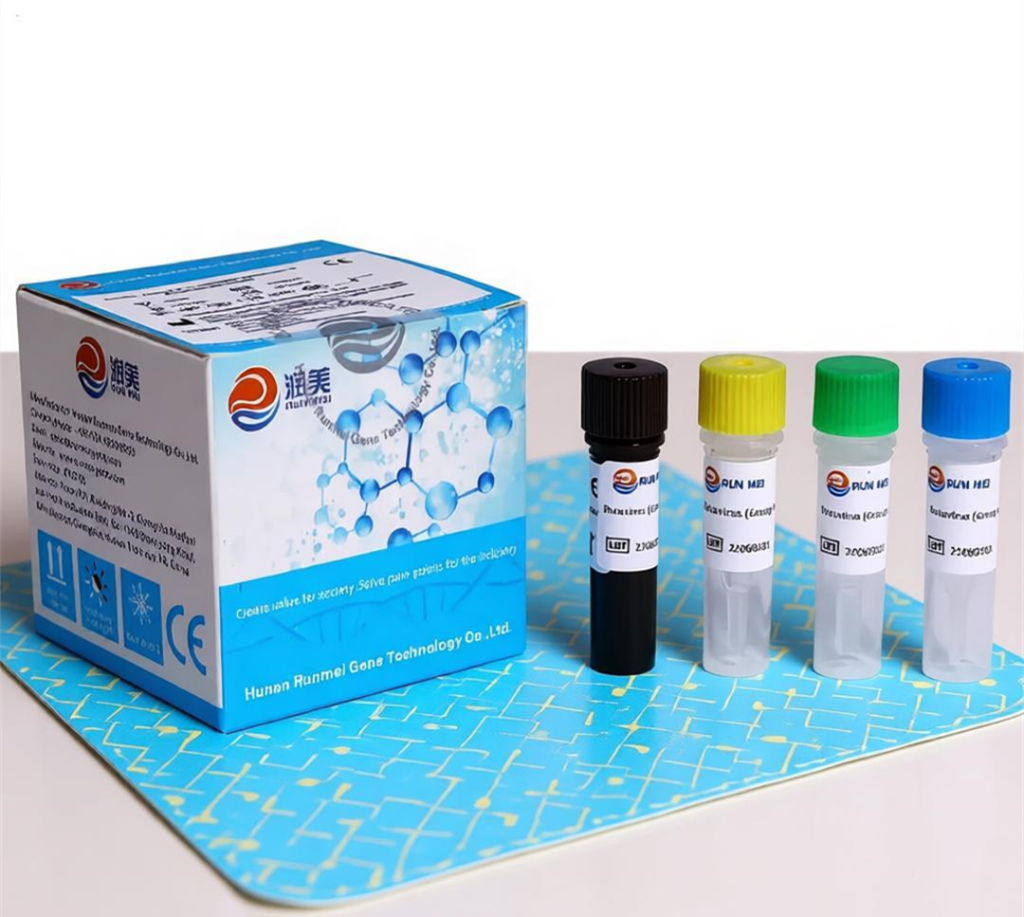
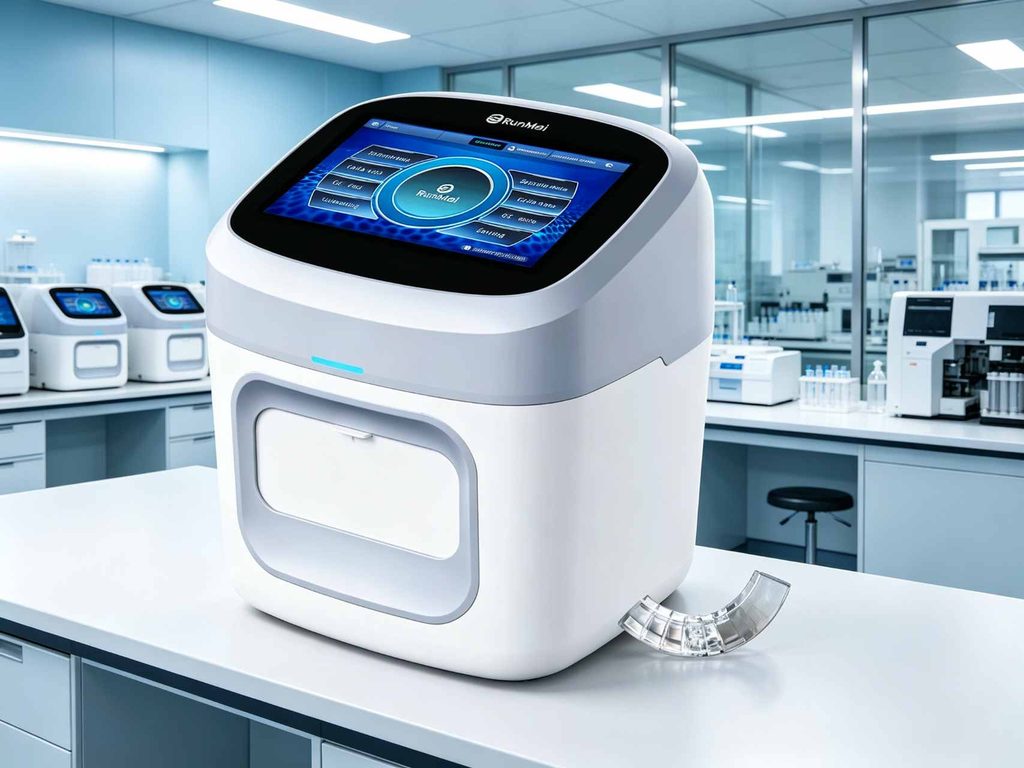
The rise of the portable blood analyzer has changed the arithmetic of rural diagnostics. A compact device can travel in a car, a motorcycle, or a canoe, and it can move between outreach posts on market days. Manufacturers that understood this early, including RUNMEI with its small-footprint instruments, are finding that the same features city labs dismiss as “nice to have” are the features that decide whether a rural program survives its first year: low sample volume, simple menus, and durability in heat and dust.
The Economics of the Rural Hematology Analyzer
Anyone who has priced laboratory equipment knows the sticker price is only the beginning. Reagents, controls, service visits, staff time, and replacement parts can multiply the real cost several times over. For a rural clinic, a محلل أمراض الدم that burns through expensive reagents is not a bargain at any purchase price. Total cost of ownership, not the quote, is the number that should drive the decision, and that is exactly the conversation more buyers are now having with suppliers.
Low-Cost CBC Analyzers Are Winning the Volume Game
The market data is unambiguous. Low-range instruments, the machines designed for small clinics and modest daily volumes, held the largest share of the hematology analyzer market in 2025, driven by affordability and a low cost per test. That is not a niche trend; it is the mainstream. Emerging markets in Africa, Southeast Asia, and Latin America are absorbing a disproportionate share of new instrument sales, and the growth rate for point-of-care hematology in these regions is running well above the global average.
E-E-A-T, Quality, and the Trust Factor
Here is where the conversation stops being about machines and starts being about trust. A rural clinician who sends a patient home with a wrong result does not just lose credibility; the whole idea of local testing suffers. That is why quality systems matter as much as price. Devices carrying ISO 13485 certification and CE or FDA clearance give clinics and ministries a defensible basis for purchase, and documentation in the form of accuracy studies and quality control materials turns a marketing claim into an auditable one. Regulators, funders, and procurement officers are all asking the same question: can you prove it?
Conclusion: The Frontier Is Open
The infrastructure gap that kept rural clinics off the hematology map was never about demand. It was about the mismatch between urban equipment and rural conditions. With compact, affordable, and genuinely field-ready blood analyzers now available, the frontier is open, and the clinics that move first will shape how their communities think about local healthcare for a generation. The technology is ready. The question is whether the rest of the system is ready to meet it.
Why This Matters
- Rural clinics are the fastest-growing buyers of compact hematology analyzers, and low-range instruments already dominate global sales.
- The complete blood count delivers outsized clinical value for a minimal reagent cost, which is why it leads rural laboratory programs.
- Portability, low power draw, and simple maintenance matter more than throughput when choosing a blood analyzer for a village clinic.
- Total cost of ownership, not the purchase price, should drive procurement decisions in low-resource settings.
Rural Hematology Analyzer FAQ
What is the difference between a hospital-grade hematology analyzer and one for a rural clinic?
Hospital-grade instruments prioritize throughput, sample capacity, and integration, and they expect stable power, climate control, and a laboratory scientist. A rural clinic analyzer must instead tolerate heat, dust, and voltage swings, run on low power, and be learnable by a nurse in days. The right choice depends entirely on the facility’s volume, environment, and staff.
How many tests per day justify buying a blood analyzer for a small clinic?
There is no fixed threshold, but clinics seeing roughly fifteen to forty patients daily with a meaningful share of anemia, malaria, or pregnancy cases typically justify the investment within a year. The deciding number is cost per test: if reagent and consumable costs are low enough, even modest volumes cover the running costs.
Can a portable blood analyzer really match the accuracy of a central laboratory instrument?
Modern compact analyzers are engineered to the same measurement principles, impedance and optical methods, used in larger instruments, and quality-controlled devices hold accuracy standards that meet clinical needs. What decides real-world accuracy is not the size of the machine but the discipline around it: daily controls, proper sample handling, and regular calibration.
References
2. World Health Organization. World Health Statistics and the Essential Diagnostics List. WHO. 2023.
3. MarketsandMarkets. Hematology Analyzers and Reagents Market Report. 2025.
4. Dataintelo. Global Hematology Analyzer and Reagent Market Analysis. 2026.