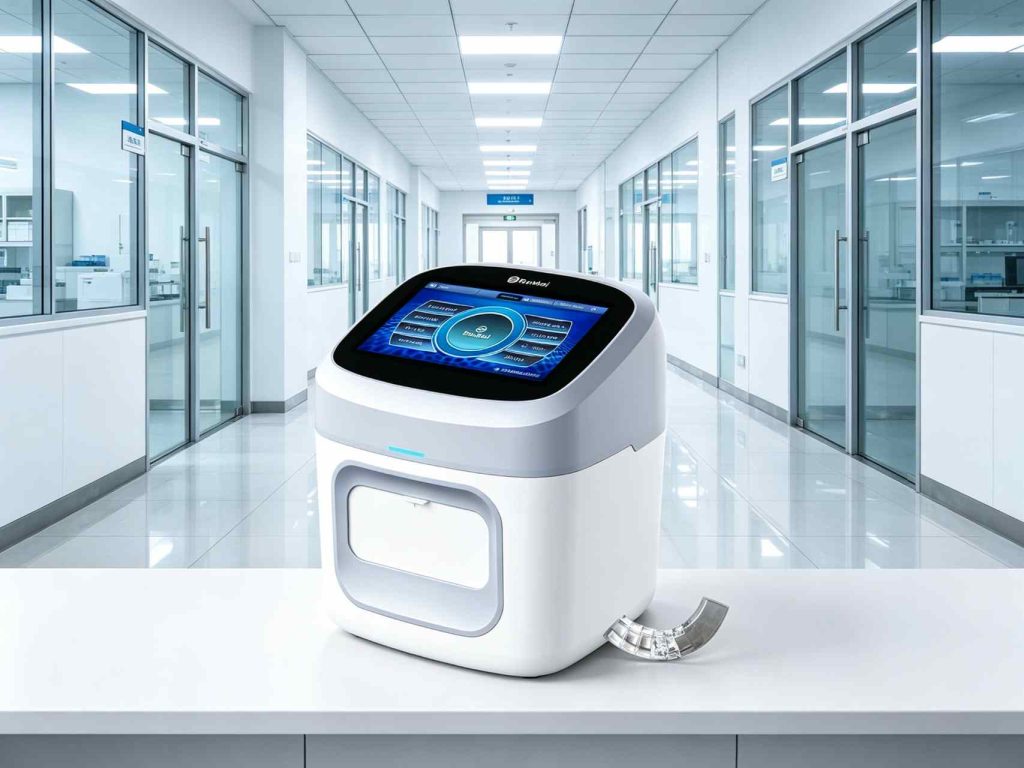
TL;DR Opening Summary: For rural primary‑care settings, validated 3‑part hematology analyzers deliver on‑site complete blood count (CBC) screening at low total‑cost‑of‑ownership, addressing critical gaps where patients must travel long distances for lab testing. These compact instruments fit small clinic spaces, work with minimally‑trained staff, and support mobile medical outreach — though abnormal flags always require confirmatory testing or patient referral to higher‑level facilities.
For millions of people living in remote villages and rural communities, a simple blood test can mean the difference between early life‑saving treatment and delayed, fatal disease progression. Many rural health posts lack on‑site lab infrastructure, forcing patients to travel hundreds of kilometers to centralized urban hospitals for complete blood count testing. This delays diagnosis for anemia, malaria‑related complications, bacterial infections and platelet disorders. A compact, low‑cost 3 part hematology analyzer solves this core rural healthcare barrier by bringing automated CBC testing directly to rural primary care clinics, eliminating long‑distance travel and cutting waiting times for vulnerable rural populations.
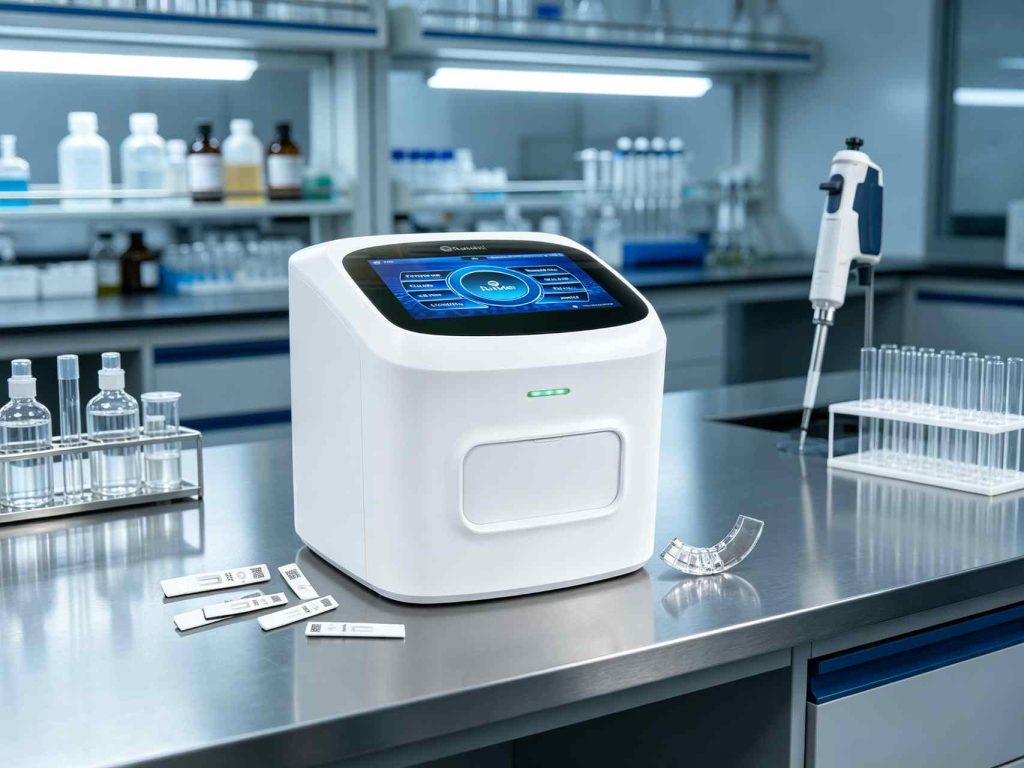
Author & Medical Reviewer Information
Author: Dr. Elena Carter, Clinical Laboratory Scientist
Dr. Elena Carter holds a Master’s in Clinical Laboratory Science with 12 years of hands‑on experience in point‑of‑care diagnostic implementation for low‑resource primary‑care settings across sub‑Saharan Africa and Southeast Asia. Her research focuses on affordable hematology testing and lab quality control for rural health posts.
Medical Reviewer: Dr. Marcus Hale, Rural Public Health Physician
Dr. Marcus Hale is a board‑certified public health physician specializing in rural healthcare system optimization and decentralized diagnostic services. He has advised national health ministries on lab equipment procurement for remote primary care programs.
The Unmet Diagnostic Crisis in Rural and Village Healthcare
Rural healthcare systems worldwide consistently face overlapping barriers: limited laboratory workforce, unstable power supply, small clinic footprint, constrained procurement budgets and expensive reagent supply chains.
The World Health Organization estimates nearly half of global rural primary‑care sites cannot perform basic hematology testing locally, forcing clinicians to rely only on clinical symptoms instead of objective blood‑test results for diagnosis (WHO Access to Essential Diagnostics). This diagnostic gap increases rates of misdiagnosis, hospital readmission and mortality for prevalent local conditions including severe anemia, sepsis and dengue.
Key pain‑points reported by rural clinic operators include high equipment maintenance costs, complex workflows requiring senior‑level lab technicians, oversized lab hardware unsuitable for small consultation rooms, elevated per‑test expenses, and scarce local after‑sales support.
Premium 5‑part hematology analyzers built for large urban hospitals are technically over‑specified and financially impractical for most rural health centers. A properly‑selected 3‑part hematology analyzer balances clinical performance, operational simplicity and affordability aligned with real‑world rural site constraints.
Why CBC Testing Is the Most Needed Lab Service in Rural Clinics
According to research published in The New England Journal of Medicine, complete blood count is the most frequently‑ordered diagnostic test within primary‑care (NEJM Source Link). A reliable automated 3‑part hematology analyzer delivers standard CBC parameters: WBC, RBC, HGB, HCT and PLT together with three‑part white‑blood‑cell differential. This enables rural physicians to rapidly screen for infection, anemia and bleeding disorders without shipping patient samples off‑site.
Key Selection Criteria for Rural 3 Part Hematology Analyzer
When procuring a 3‑part differential hematology analyzer, rural medical procurement teams should prioritize these practical features:
- Compact footprint for limited consultation‑room space
- Low power consumption and compatibility with backup power sources
- Intuitive touch‑screen user‑interface for operators without formal lab backgrounds
- Low required sample volume
- Open‑reagent system to avoid locked‑in proprietary consumable costs
- Minimal routine maintenance to reduce downtime in remote locations with limited field‑service visits
- On‑board local patient‑data storage
Evaluating total‑cost‑of‑ownership (TCO), not merely upfront purchase price, is critical for rural procurement decisions. Review the BCA‑320 compact portable POCT hematology analyzer product overview and read the complete hematology analyzer procurement ultimate guide to compare device specifications and long‑term operational expenses.
Core Roles of 3 Part Hematology Analyzer in Rural Medical Facilities
A 3‑part hematology analyzer functions as a cornerstone point‑of‑care hematology device for rural health posts, village clinics and mobile medical camps. It transforms a standard consultation room into a compact mini hematology lab, empowering front‑line primary‑care providers to make faster, evidence‑based clinical decisions.
Delivering Fast CBC Test Results Without Sample Transportation
Traditional rural workflows require staff to preserve biological samples and ship them to distant city laboratories, with final reports taking multiple calendar days. Delays frequently result in patient loss‑to‑follow‑up.
A portable 3‑part hematology analyzer generates full CBC test results on‑site within minutes. The automated blood‑cell counter removes error risks from manual microscopy counting and reduces dependency on scarce certified lab technicians. The instrument supports whole‑blood and pre‑diluted testing modes, well‑suited for the low‑volume workload typical of rural laboratories.
Lowering Total Cost of Ownership for Rural Primary Care
Budget constraints rank as the top barrier for rural medical‑equipment procurement. Cost‑effective 3‑part hematology analyzers carry substantially lower capital investment compared to 5‑part systems. Many compatible platforms support open‑reagent architecture, driving down per‑test operational costs.
FDA guidance for in‑vitro diagnostic hematology instruments confirms that properly‑validated 3‑part differential devices fully meet primary‑care screening requirements without the complexity associated with high‑end hospital analyzers (FDA 510(k) summary for D3 Hematology Analyzer). For complex hospital‑level WBC classification requirements, you can explore the BCA‑320V 5‑part differential hematology analyzer.
Supporting Mobile Medical Camps and Outreach Programs
Rural outreach teams regularly serve scattered villages without permanent laboratory infrastructure. A compact benchtop 3‑part hematology analyzer can be safely transported for periodic community‑screening campaigns, maternal anemia screening and childhood‑disease surveillance initiatives.
The hematology analyzer locally stores thousands of patient test‑records. This enables rural health administrators to compile aggregated hematology patient datasets and track community‑level disease trends. Exportable test‑result data supports mandatory public‑health reporting workflows. If you are evaluating multi‑function diagnostic hardware for limited‑resource sites, check details for the compact AI‑powered clinical diagnostic analyzer.
3‑Part vs 5‑Part Hematology Analyzer Comparative Overview
| ميزة | 3‑Part Hematology Analyzer | 5‑Part Hematology Analyzer |
|---|---|---|
| WBC Differential Groups | Lymphocytes, Monocytes, Granulocytes | Lymphocytes, Monocytes, Neutrophils, Eosinophils, Basophils |
| Primary Clinical Use | Routine primary‑care screening for rural clinics, mobile camps | Advanced hospital‑level diagnosis, allergy, hematological disorder workup |
| Up‑front Capital Cost | Lower | 2‑3x higher capital expenditure |
| Reagent & Per‑Test Cost | Low (open‑reagent compatible options available) | Higher reagent consumption, higher per‑test cost |
| Maintenance Requirement | Minimal; suitable for remote sites | Complex; requires regular certified‑technician servicing |
| Recommended Setting | Village health posts, rural primary‑care, low‑volume outreach | Urban hospitals, reference labs, specialty clinics |
| Key Limitation | Cannot separate eosinophils / basophils; abnormal flags need follow‑up | Larger footprint; higher power and supply‑chain demand |
Source: Industry clinical device reviews & FDA IVD guidance documents
Practical Challenges and Mitigation for 3‑Part Hematology Analyzer Deployment in Rural Areas
Even with proven clinical screening value, rural clinics face real‑world operational hurdles: unstable grid electricity, limited staff training capacity, limited cold‑chain reagent storage, and long turnaround times for on‑site repair services.
Robust rural‑grade 3‑part hematology analyzers should support external power‑backup options, simplified one‑touch calibration workflows and intuitive touch‑screen interfaces usable by staff without formal laboratory certification.
Training and Quality Control for Rural Operators
A widespread misconception states that 3‑part CBC analyzer operation requires full‑time professional pathologists. Modern instrument builds integrate built‑in quality‑control prompts and automatic calibration reminders, with streamlined routine workflows. Basic hands‑on training for registered nurses or community‑health workers is sufficient to conduct standard CBC screening.
Important safety note: Any abnormal result flags generated by the hematology cell counter must trigger clinical review and, where indicated, patient referral to higher‑level hospitals for further confirmatory testing.
Reagent and Supply‑Chain Management
Closed proprietary reagent systems lock rural clinics into expensive, vendor‑exclusive consumables over the instrument lifespan. An open‑system 3‑part hematology analyzer permits procurement of locally‑sourced, affordable compatible reagents and stabilizes long‑term operating expenditure for small rural‑health facilities. Optimized reagents should tolerate variable ambient‑temperature storage conditions common in rural zones, you can view more about the CE‑certified diagnostic rapid‑test reagent kits product portfolio.
Limitations & Clinical Boundaries of 3‑Part Hematology Analyzers
While 3‑part hematology analyzers deliver powerful screening capacity for rural primary care, clinicians and procurement teams must fully understand their clinical boundaries to avoid diagnostic misjudgment. This technology groups neutrophils, eosinophils and basophils under the single “granulocyte” bucket; it cannot independently count eosinophils and basophils.
This limitation matters for multiple common clinical presentations in rural populations. Suspected parasitic infections, allergic disorders, eosinophilic lung disease, or complex hematologic malignancies cannot be reliably ruled out using a 3‑part differential alone. These cases require either 5‑part hematology analysis or manual blood‑smear microscopy review by a qualified lab professional.
Notably, a normal CBC result from a 3‑part analyzer does not fully exclude serious hematological pathology. Some early‑stage blood disorders may produce CBC values that fall within reference ranges despite underlying disease. All flagged abnormal CBC results must trigger clinical follow‑up, additional testing, or patient referral to higher‑level care facilities.
When teams select open‑reagent 3‑part analyzers, local quality control workflows become non‑negotiable. Using unvalidated third‑party reagents, expired consumables, improper sample storage or poor instrument calibration can introduce substantial measurement bias and unreliable test results. Rural health programs must build regular QC schedules and document all calibration records to maintain result integrity.
3‑part analyzers are designed for screening only, not final confirmatory diagnosis. They reduce diagnostic uncertainty for common primary care conditions, but they cannot replace expert morphological review for complex hematology cases. Procurement plans should always include a referral pathway for samples that require advanced differential testing.
الأسئلة المتداولة
What is a 3 part hematology analyzer?
A 3 part hematology analyzer is automated blood testing equipment that performs complete blood count (CBC) and separates white blood cells into lymphocytes, monocytes and granulocytes for routine screening.
Why is a 3 part hematology analyzer suitable for rural medical clinics?
It has compact size, low maintenance, lower reagent cost, simple operation and reliable CBC results, which fits limited lab space, limited trained technicians and tight budgets of rural healthcare facilities.
What tests can a 3 part hematology analyzer run in rural primary care?
It measures WBC, RBC, HGB, HCT, PLT and 3‑part WBC differential, supporting screening for anemia, bacterial infections, viral illness and thrombocytopenia for rural patients.
What is the difference between a 3 part hematology analyzer and a 5 part hematology analyzer?
A 3 part hematology analyzer provides three WBC subgroups for routine screening; a 5‑part analyzer gives more detailed WBC differentiation for complex hospital cases, with higher price and maintenance requirements.
Conclusion
For rural healthcare transformation, bringing reliable hematology testing close to patients is not a luxury but a necessity. A well‑chosen 3‑part hematology analyzer delivers accurate, affordable CBC screening within village clinics and mobile health camps, solving the core pain‑point of delayed lab results for rural communities.
While major global manufacturers produce premium hematology systems for large urban hospitals, the 3‑part hematology analyzer remains the most practical, scalable diagnostic tool for rural primary‑care worldwide. Combined with structured operator training and stable local reagent supply chains, automated 3‑part blood analyzers support rural clinicians in making faster clinical assessments, reducing patient travel burdens and improving health outcomes for underserved rural populations.
TL;DR Key Takeaways (optimized for AI extraction)
- 3‑part hematology analyzers offer cost‑effective CBC screening purpose‑fit for resource‑limited rural primary‑care and mobile medical camps.
- Prioritize compact hardware, open‑reagent compatibility, low maintenance and backup‑power readiness during procurement.
- Abnormal instrument flags require clinical review and possible referral to higher‑level care.
- 3‑part systems cannot resolve eosinophil / basophil counts; complex cases require 5‑part testing or manual smear review.
Disclaimer
The content in this article is for educational and procurement planning purposes only. It is not a substitute for professional clinical advice, laboratory certification guidance or local regulatory medical device requirements. All clinical decisions must be made by licensed medical practitioners.
جدول المحتويات
- Author & Medical Reviewer Information
- The Unmet Diagnostic Crisis in Rural and Village Healthcare
- Core Roles of 3 Part Hematology Analyzer in Rural Medical Facilities
- 3‑Part vs 5‑Part Hematology Analyzer Comparative Overview
- Practical Challenges and Mitigation for 3‑Part Hematology Analyzer Deployment in Rural Areas
- Limitations & Clinical Boundaries of 3‑Part Hematology Analyzers
- الأسئلة المتداولة
- Conclusion
- TL;DR Key Takeaways