Meta Title: Blood Count in Rural Diabetes Clinics: Why It Belongs | RunMei
Meta Description: Blood count in rural diabetes clinics. Why the CBC belongs in routine diabetic care, from anemia to infection detection.
URL: https://runmeihealth.com/blood-count-diabetes-clinic-rural
By Dr. Elena Marchetti · MD, MPH, Rural Health Diagnostics | Reviewed by Prof. Daniel Mwangi (PhD, MSc, Laboratory Systems Advisor) | Published: 2026-10–09
The diabetes register lists 214 patients, the glucometer works, and the clinic has learned to manage the basics well. A faster diagnosis is the whole point of what follows. The one test the register never shows is the blood count — and the anemia that complicates diabetes is quietly present in a significant share of those 214 patients, undetected and untreated. The mobile blood analyzer catalog covers the instruments rural programs order most often.
The pages that follow cover what the sales brochure does not: what blood count can and cannot deliver in Rural Areas, what it costs to run rather than to buy, and the mistakes that turn useful instruments into idle furniture. The International Diabetes Federation estimates that 54% or more of adults living with diabetes in sub-Saharan Africa remain undiagnosed, a gap driven largely by weak access to primary care diagnostics. The aim is to give clinic managers and program planners a field-tested basis for decisions, not a list of product claims. IDF . Facilities weighing the options can browse the hospital biochemical analyzer range to compare configurations side by side.
Key Takeaways
- Anemia is a common and under-recognized complication in diabetes care.
- The CBC supports infection detection, kidney monitoring and medication safety.
- Attaching the count to the diabetes review visit costs nothing extra.
- Serial counts turn the diabetes clinic into a complete chronic care service.
The Complication the Diabetes Register Misses
Diabetes and anemia reinforce each other. Kidney decline lowers erythropoietin and hemoglobin; chronic inflammation and nutritional gaps add to the burden; and the anemic diabetic patient tolerates exercise, recovery and infection worse than the non-anemic one. The diabetes clinic that measures only glucose is managing half the disease.
The blood count also watches the treatment. Some glucose-lowering and blood-pressure regimens affect the blood, and the count catches the effect early. The monthly or quarterly diabetes review is the natural home of the test — the patient is already in the room.
Results become evidence only when they are recorded. A register — patient, date, count, action taken — turns a stream of tests into a picture of the community’s health, and that picture is what justifies the program’s continuation. Clinics that keep the register find it writes their own case for support. And this is exactly where blood count changes the decision. WHO . Programs that want a deeper differential can read the blood analyzer instruments page for the trade-offs.
The Review-Visit Count
Attach the CBC to the regular diabetes review: glucose plus count, one visit, one record. The habit is cheap, the data is serial, and the trend becomes the clinic’s own evidence about how its patients are actually doing.

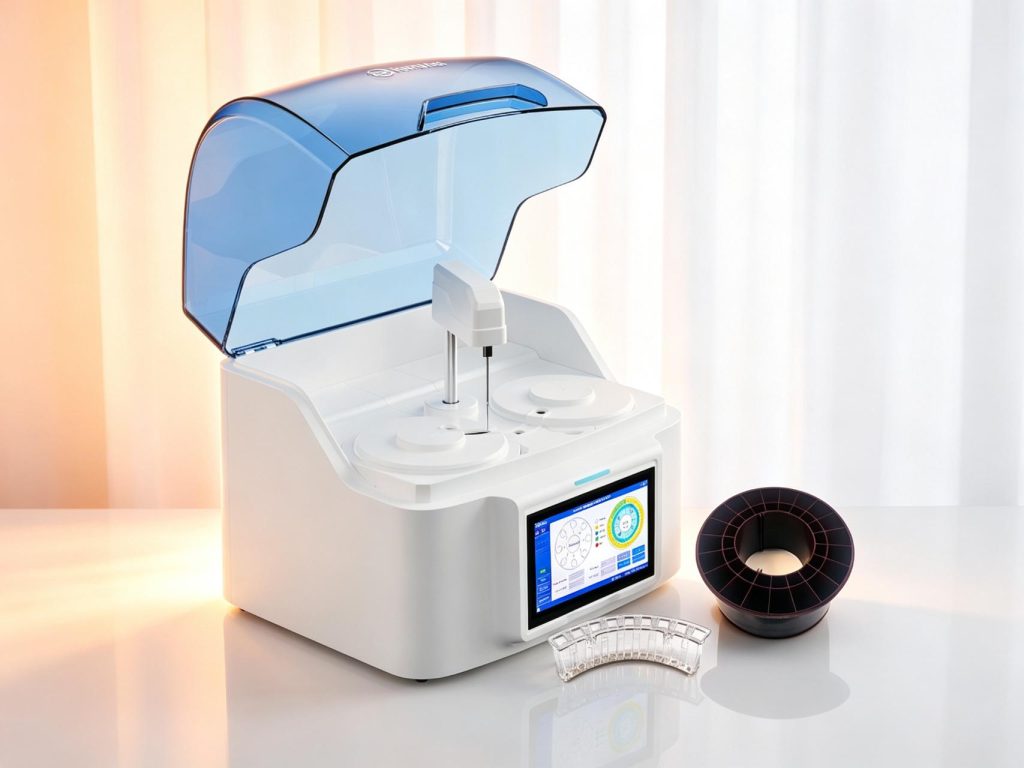
Fig. 1 — RunMei hospital biochemical analyzer in a rural clinic setting. Blood analyzer diabetes clinic cbc monitoring rural. | Alt: blood analyzer diabetes clinic CBC monitoring rural
What the Count Adds to the Diabetic’s Care
A raised white cell count in the diabetic patient flags infection — a leading cause of admission and a frequent driver of poor glucose control. Falling hemoglobin tracks kidney decline and nutrition. Platelet trends matter for the patient on certain regimens and for the surgical diabetic. Each signal is available from one test at one visit.
The count does not replace the HbA1c or the glucose meter; it complements them. The diabetes clinic that pairs metabolic monitoring with the blood count sees the whole patient, and the register it builds is a genuinely useful clinical record.
the blood count is the seed; the program is the tree. Training, supervision, registers, quality checks and a supply line that outlasts the donor — these are what turn a machine into a service that keeps running. Programs that design for sustainability from the first installation meeting are the ones still running at the five-year review. Programs built around blood count see the effect within the first month. Budget teams should see the 5-part hematology analyzer cost analysis before signing off on procurement.
The Fever Diabetic
The diabetic with fever needs the white cell count the same day, because infection changes insulin needs, antibiotic choice and admission decisions. The clinic that can answer in minutes rather than days manages the dangerous diabetic better.
Building the Complete Chronic Care Visit
The complete chronic care visit has a shape: registration, blood pressure, glucose, count, medication review, foot check, next appointment. The count is one step among seven, and it is the step that has been missing in most rural programs. Adding it turns the diabetes clinic from a medication distribution point into a monitoring service.
the blood count that serves the diabetes clinic pays for itself across the day: the same instrument runs the antenatal counts, the fever triage and the chronic disease schedules. The diabetes register is one beneficiary of a machine the whole facility owns.
Trust is built one control run at a time. The daily control, the logged result, the outlier that gets acted on rather than explained away — these are the habits that make a rural result worth acting on. Facilities that document their controls report something else too: staff who believe their own numbers and clinicians who trust them. The logbook is not paperwork; it is the evidence that the blood count is telling the truth.
The Quarterly Register Review
Four times a year, read the diabetes register with the counts included: how many patients have documented anemia, how many had an infection flagged, what was done. The review is what turns collected data into improved care.

Fig. 2 — RunMei 5-part hematology analyzer during routine testing. Blood count chronic care visit diabetes register. | Alt: blood count chronic care visit diabetes register
The Supply Plan
The supply plan answers one question: what does this clinic need, in what quantity, and how long does resupply take? Reagents, controls and consumables each have their own buffer, sized to the longest plausible interruption — the rainy season, the border delay, the transport strike. The plan is written in months, not in orders.
The same pattern repeats in facility after facility: the clinic that measures its own patients keeps them, and the clinic that sends them away loses them. A blood count changes that arithmetic, because the investment is recovered inside the first year — not through gadget appeal, but through fewer referrals, fewer repeat visits and a patient list that finally trusts the results it is given.
The Buffer Discipline
The rule of thumb that works in practice: hold enough stock to run the clinic’s normal volume for the resupply period plus one month. Facilities that follow the rule ride out the interruptions; facilities that run to empty stop testing at the worst possible moment.
The Open-Channel Option
Analyzers that accept qualified third-party reagents turn the supply plan into a competitive market instead of a single dependency. The option matters most where a locked reagent line would make the per-test cost unsustainable — which is most of rural primary care.
For teams accountable for diabetes anemia, the practical effect shows up within the first month. Decisions about diabetic clinic CBC are usually made at district level — and the register feeds them. It also strengthens chronic disease blood test, a benefit that rarely appears in the budget line.
الأسئلة المتداولة
Q1. Why should a diabetes clinic run blood counts?
Anemia, infection and medication effects are common in diabetes, and the CBC catches all three at the visit where the patient is already present.
Q2. How often should diabetic patients have a CBC?
At each routine review is ideal; quarterly is a practical minimum for registered patients on stable therapy.
Q3. Does the blood count replace glucose monitoring?
No. It complements glucose and HbA1c monitoring by adding the red cell, white cell and platelet picture.
Q4. Which diabetic patients need urgent counts?
Those with fever, suspected infection, unexplained fatigue, or a change in renal function should be counted promptly.
Sources & References
- The International Diabetes Federation estimates that more than half of adults living with diabetes in sub-Saharan Africa remain undiagnosed, a gap driven largely by structural barriers in primary care access. Source: IDF — https://diabetesatlas.org/
- The WHO Regional Office for Africa reports that noncommunicable diseases now account for about 37% of deaths in the African Region, and that shortages of trained specialists, diagnostics and clinical protocols continue to limit access to quality care. Source: WHO — https://www.who.int/news-room/fact-sheets/detail/noncommunicable-diseases
Disclaimer
This article is for informational and marketing purposes only and does not constitute medical advice, a product claim, or a regulatory certification statement. Device availability, regulatory status (FDA 510(k)/CE/ISO 13485) and specifications vary by country and model; always verify current approvals with the manufacturer and consult local regulations before procurement or use.