Meta Title: Blood Analyzer in Tanzania | RunMei
Meta Description: Tanzania’s community health workers are running point-of-care blood analyzers. Here is the training model, competency checklist and quality plan that makes it work.
URL: https://runmeihealth.com/blood-analyzer
By Dr. Amara Okafor · MBBS, MSc Global Health Diagnostics | Reviewed by Dr. Michael Chen (PhD, Senior Laboratory Advisor) | Published: 2026-10-08
Mama Maria is not a laboratory scientist. Minutes matter more here than almost anywhere else in medicine. This guide answers the specific questions that surround blood analyzer: what it delivers, what it cannot do, and what the true cost of ownership looks like. She is a village health worker in Morogoro Region with a phone, a solar panel and — since last year — a compact point-of-care blood analyzer in a locked cabinet at her post. She is also the reason a child with malaria got treated the same afternoon instead of three days later. Her story is not an exception; it is the Tanzania model, and it is spreading.
This is written as a field briefing, not an advertisement. It deals in the realities of blood analyzer in Tanzania: power, training, reagents, maintenance and trust. About 3 billion people worldwide still cannot reach a health facility within one hour on foot, a figure the WHO has used to argue for diagnostics that travel to patients instead of the other way around. If you are planning an installation — or defending an existing one — the checklists and protocols here will spare you lessons that other facilities have already paid for. The portable blood analyzer catalog covers the instruments rural programs order most often.
Key Takeaways
- Task-shifting hematology to community health workers is feasible with structured, hands-on training.
- A competency checklist, not a diploma, is the real qualification for operating a point-of-care analyzer.
- Built-in QC and remote support close the quality gap in settings without a supervising technologist.
- Two-day training plus monthly supervision is the minimum viable package for safe operation.
Why Task-Shifting Diagnostics Works in Rural Tanzania
Tanzania has roughly one laboratory professional for every tens of thousands of rural residents, a ratio that no hiring campaign can fix quickly. Task shifting — moving defined diagnostic tasks to community health workers under supervision — is the only model that scales in the short term. The country already task-shifts malaria rapid tests and family planning; hematology is the logical next step, because modern analyzers do the counting and the operator’s job is process, not interpretation.
the blood analyzer is the seed; the program is the tree. Training, supervision, registers, quality checks and a supply line that outlasts the donor — these are what turn a machine into a service that keeps running. Programs that design for sustainability from the first installation meeting are the ones still running at the five-year review. That is the practical reality of blood analyzer in the field. Programs that want a deeper differential can read the hospital biochemical analyzer page for the trade-offs.
What the WHO Says About Task Shifting
The WHO has long endorsed task shifting as a strategy for extending essential services in health-worker-scarce settings, and its guidance emphasizes structured training, supervision and quality assurance. A community worker operating a point-of-care blood analyzer under a defined protocol is squarely within that framework — provided the three pillars are real.

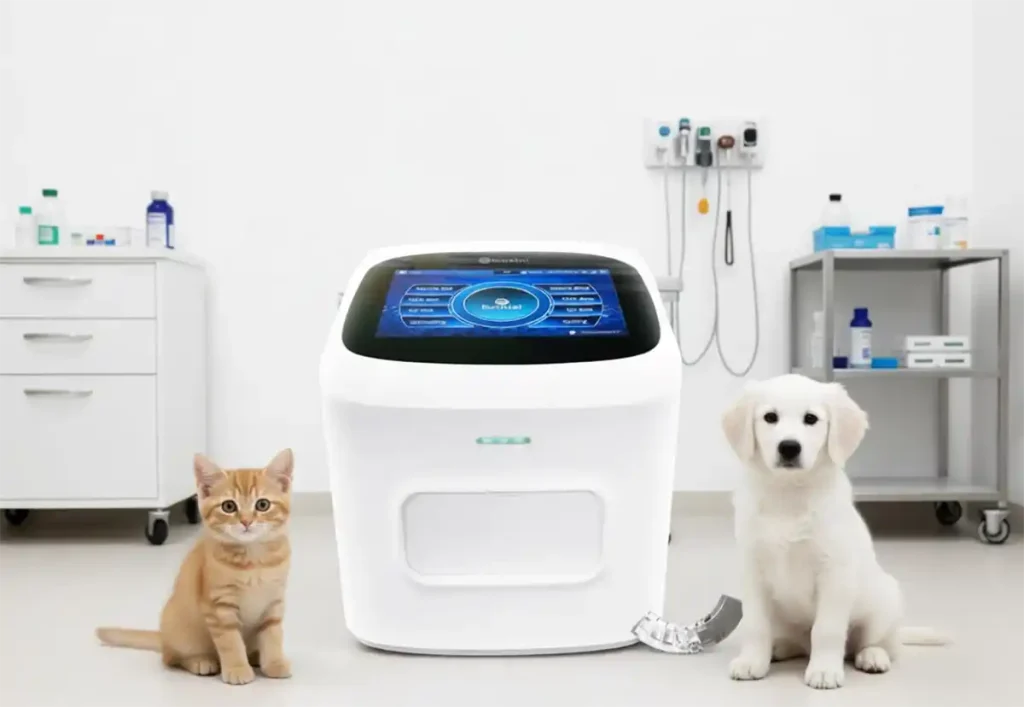
Fig. 1 — RunMei hospital biochemical analyzer in a rural clinic setting. Community health worker blood analyzer training. | Alt: community health worker blood analyzer training
The Training Curriculum That Works
The effective Tanzanian model compresses into two days what a lab school teaches in two years, because the blood analyzer automates the science. Day one covers blood collection by finger-prick, loading the sample, and running the machine. Day two covers reading results against reference ranges, recognizing error codes, troubleshooting, and knowing which results trigger a call to the supervising clinician.
None of this happens without people. The clinic that treats the blood analyzer as a machine buys a machine; the clinic that treats it as a skill builds a capability. Operators need a hands-on competency pathway, a named backup for every shift, and refresher sessions that follow staff turnover — because in Tanzania, the person trained last year may be the person who left, and the person answering for today’s results is the one who was never trained at all. And this is exactly where blood analyzer changes the decision. Budget teams should see the cost-effective blood analyzer cost analysis before signing off on procurement.
The Competency Checklist
Before certification, each worker must demonstrate: correct finger-prick technique on a child and an adult, proper sample loading without bubbles or clots, accurate reading of five consecutive results, correct response to each common error code, and proper storage and disposal of reagents. Sign-off is by observation, not examination — the worker must do it, not recite it.

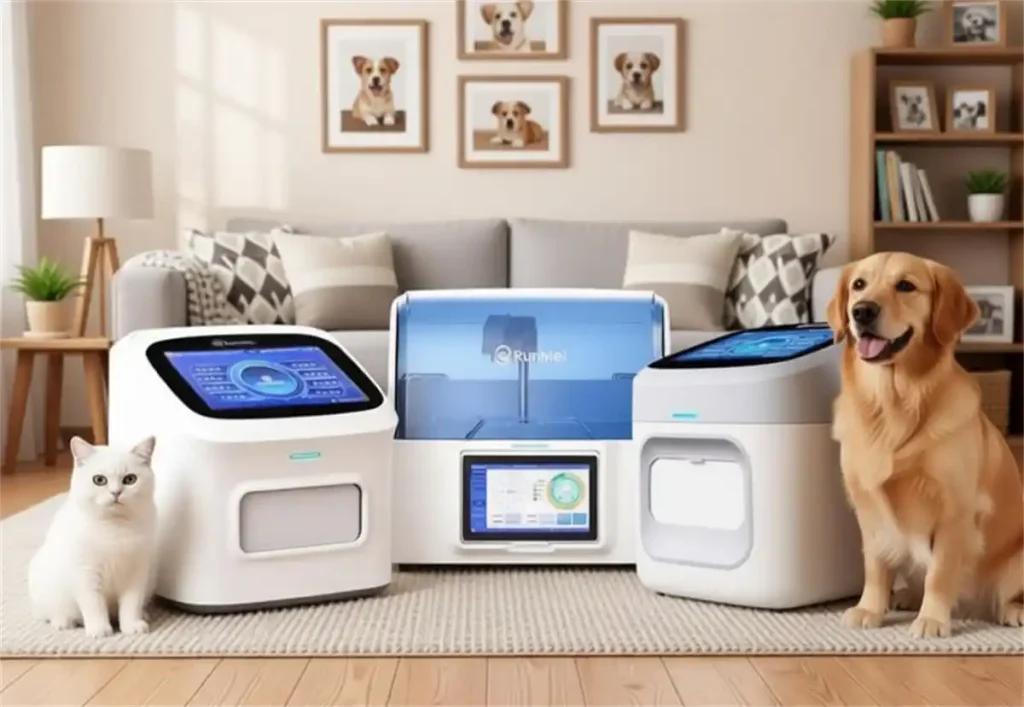
Fig. 2 — RunMei cost-effective blood analyzer in a rural clinic setting. Point-of-care blood analyzer village health post. | Alt: point-of-care blood analyzer village health post
Keeping Quality High Without a Lab Manager
The objection most often raised is quality: who watches the watcher? The answer is built into the equipment and the system. the blood analyzer runs internal controls automatically and flags abnormal patterns; a supervisor reviews uploaded results weekly; and a monthly visit checks reagent stocks, cold-chain integrity and a sample of re-tested specimens.
Trust is built one control run at a time. The daily control, the logged result, the outlier that gets acted on rather than explained away — these are the habits that make a rural result worth acting on. Facilities that document their controls report something else too: staff who believe their own numbers and clinicians who trust them. The logbook is not paperwork; it is the evidence that the blood analyzer is telling the truth.
When to Refer, When to Treat
A village health worker is not asked to diagnose. The protocol defines the triggers: a hemoglobin below the agreed threshold, a white cell count above the agreed threshold, or any analyzer flag goes to the supervising clinician by phone or referral. This division of labor — machine counts, worker screens, clinician decides — is what makes the system safe at scale.
The Referral Design
the blood analyzer changes where the referral line is drawn. With blood analyzer in place, routine monitoring stays local and referral reserves itself for what the clinic cannot do: confirmatory testing, specialist review, severe or complicated cases. The design work is agreeing the line — in writing, with the district — before the machine goes live.
What Stays Local
Routine counts, serial monitoring and treatment follow-up stay local once the results are trustworthy. The clinic that can show its controls and its register earns the right to keep these cases — and the district earns back its referral capacity for the cases that genuinely need it.
What Travels With the Patient
When referral is needed, the result travels: the count, the date, the trend if there is one, the treatment already given. A referral with the numbers attached changes what the receiving clinician can do on arrival — and the register is what makes the attachment routine.
The same logic applies to community health worker training, which clinics in the region often underestimate. For teams accountable for task shifting diagnostics, the practical effect shows up within the first month. Decisions about rural hematology are usually made at district level — and the register feeds them.
الأسئلة المتداولة
Q1. Is it safe for community health workers to run blood analyzers?
Yes, when training, supervision and quality assurance are structured. The analyzer performs the measurement automatically; the worker follows a defined protocol, and results beyond thresholds are referred to a clinician.
Q2. How long does it take to train a community health worker?
The proven model is a two-day hands-on course covering collection, operation, result reading, error handling and referral triggers, followed by monthly supervision visits.
Q3. What happens if the analyzer gives an error or unusual result?
Workers are trained to follow the instrument’s error protocol and to escalate flagged or out-of-range results to the supervising clinician by phone or referral — they are never expected to interpret abnormal results alone.
Q4. Do community health workers need laboratory qualifications?
No formal lab qualification is required. A documented competency checklist, signed off by observation, is the qualification for operating a point-of-care analyzer under protocol.
Sources & References
- World Health Organization data show that in lower-income countries a large share of the rural population still lives beyond the reach of a functioning laboratory; the WHO recommends primary care facilities be reachable within roughly 5 km, yet global estimates indicate about 3 billion people cannot reach a health facility within one hour on foot.
- Reviews published in the New England Journal of Medicine have repeatedly underlined that the single most reliable way to improve outcomes in low-resource settings is to shorten the interval between clinical presentation and a correct laboratory diagnosis.
Disclaimer
This article is for informational and marketing purposes only and does not constitute medical advice, a product claim, or a regulatory certification statement. Device availability, regulatory status and specifications vary by country and model; always verify current approvals with the manufacturer and consult local regulations before procurement or use.