Meta Title (≤60 chars): Why Point-of-Care Tests Sit on Ghana’s Shortage Lists
Meta Description (≤155 chars): A cross-sectional study in Ghana’s Bono region found point-of-care tests poorly available in rural facilities. Blood analyzers can change that picture.
Target Keywords: point of care testing Ghana, blood analyzer West Africa, rural lab equipment availability, CBC testing community health centers
By RunMei Health Editorial Team | Published: September 18, 2026 | Reading time: ~5 min
In 2023, researchers went through health facilities across Ghana’s Bono region and counted what was actually on the shelves. Their cross-sectional study, published in open-access literature, found that point-of-care diagnostic tests were poorly available – blood typing, bilirubin, hepatitis C, CD4, and basic hematology all showed up as gaps, and the authors’ conclusion was blunt: the availability of point-of-care tests is the key barrier to implementing point-of-care testing in low-resource settings. The tests exist. The machines do not reach the clinics.
What the Bono study found
The Bono region study surveyed facilities on availability, stock levels, and usage of in-vitro diagnostics, and its findings mirror what researchers find across West Africa: when essential tests are missing, clinicians adapt by guessing, referring, or doing without. The study recommended implementing point-of-care tests – including blood counts – to eliminate accessibility barriers at the primary level.
It is worth reading the mechanism behind ‘poor availability.’ Sometimes it is procurement: the district buys what the capital decides. Sometimes it is distribution: reagents expire in regional stores before reaching rural shelves. And sometimes it is simply that the facility was never equipped in the first place – no analyzer, no test, full stop.
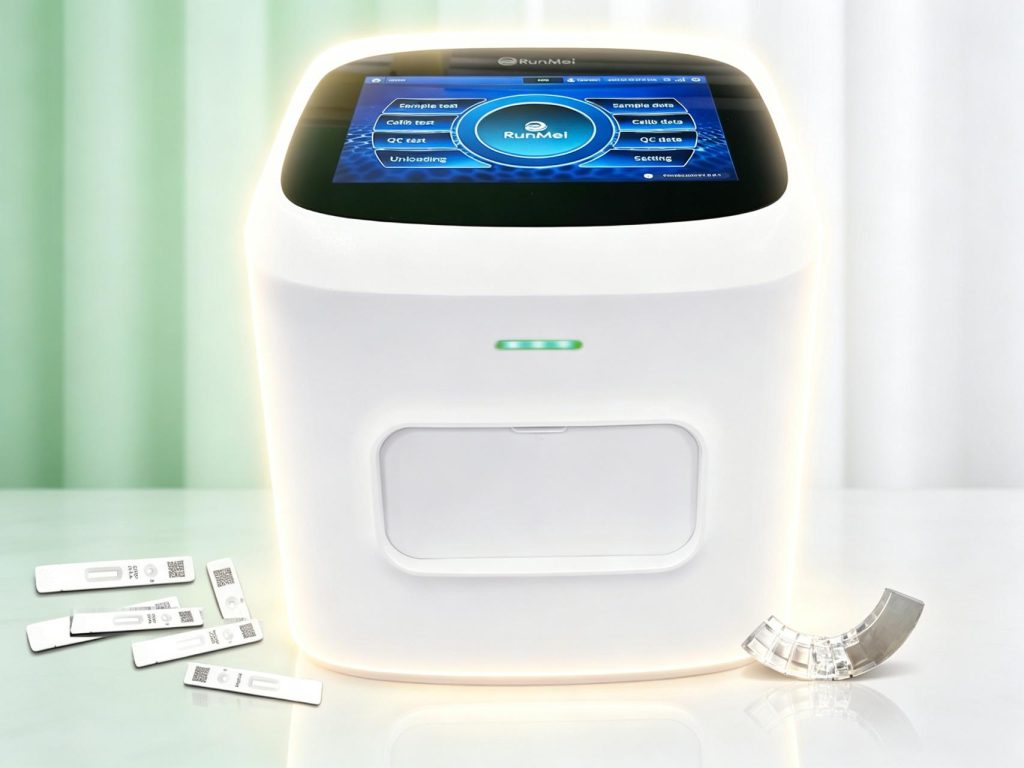
على hematology analyzer for point-of-care settings range is designed so a rural facility can add one test at a time without re-engineering the clinic.
The difference between a test and a device
Rapid tests come and go through the supply chain as single-use commodities. A blood analyzer is different: it is a durable device that, once installed and maintained, produces tests on demand for years. That difference is why devices matter for rural availability in a way that consumables alone cannot match.
One working hematology analyzer at a health center converts a chronic ‘unavailable’ into a daily service. The same is true of a portable blood analyzer for facilities that see patients in outreach. Devices have failure modes – power, reagents, training – but they fail loudly and can be fixed, whereas an empty shelf fails silently every single day.
How availability drives clinical behavior
Clinicians order the tests they know will come back. Where CBC is unavailable, nobody orders it, and the conditions it would detect – anemia in pregnancy, hidden infection, bleeding risk – go unmanaged until they become emergencies. This is the quiet cost of availability gaps: not the missing result, but the missing decision.
Studies of primary-care quality in West Africa consistently find that the presence of a functioning device changes prescribing behavior, referral rates, and patient confidence. A clinic that can run a hemoglobin test attracts antenatal patients; a clinic that cannot loses them to informal care.
The short version of the argument lives in this article; testing without a laboratory builds the full case.
Fitting a blood analyzer into Ghana’s health system
Choosing what the facility can sustain
Ghana’s Community-based Health Planning and Services (CHPS) model has taken care to the doorstep of thousands of villages, but the labs have not always followed. The practical middle path is tiered: health centers get an automatic hematology analyzer for daily CBC work; CHPS compounds and mobile teams get a portable analyzer; district hospitals keep the high-throughput reference instruments.
Whichever tier a facility occupies, the buying questions are the same: power draw, reagent cold-chain needs, consumable cost per test, and whether the supplier can support training and service in-country. A device that needs a service engineer from overseas every quarter is not rural equipment, whatever the brochure says.
The roadmap that makes availability durable
Availability is not a purchasing event; it is a system property. Facilities that keep CBC available for years do four things: they hold buffer reagent stock, they train two operators per device, they schedule preventive maintenance, and they participate in external quality assessment so the results stay trustworthy.
Ministries building national diagnostics programs increasingly write exactly this roadmap into policy, and the WHO Essential Diagnostics List gives them the test menu to plan around. The blood analyzer is the anchor device of that plan at primary level – the one test that justifies its bench space daily.
The sequence that works in practice starts with the test menu, not the machines: agree on the five tests every health center must offer, then procure the devices and reagents for exactly those. A facility that offers CBC, malaria, glucose, urine, and pregnancy testing covers most of its consultations, and the equipment list for those five is short enough to manage and fund. Facilities should also be honest about demand before they buy: a post seeing twenty patients a day does not need a hospital-scale analyzer, and a district hospital does not need a point-of-care device alone. Sizing the device to the facility keeps machines busy and service contracts affordable.
For procurement teams, the portable blood analyzer page lists the specifications that matter in the field, not just on paper.
What the stockout teaches us about device design
The Bono study’s finding – that availability itself is the barrier – points to a design lesson: the best rural device is the one that tolerates a broken supply chain. That means analyzers that use reagents with long shelf life and minimal cold-chain dependence, that can run on battery or solar, and that keep working while the distributor sorts out the next order.
It also means fewer consumables, not more. Every unique reagent a device needs is another item that can stock out, expire, or be delayed at the port. Rural facilities do not need the most feature-rich analyzer; they need the one whose supply chain they can actually feed.
Health teams can help themselves in parallel: buffer stock policies, two approved reagent suppliers, and early ordering with the district store. Availability is a system property, and the system is built as much from procurement habits as from the device itself.
From study findings to fewer missed diagnoses
Availability is not a purchasing event; it is a system property, and the Bono study’s lesson is that the system must be designed around the facility’s real conditions – its power, its supply routes, its staffing. The analyzer is the anchor of that design, and the design is what makes the anchor hold.
Ghana’s health system has the architecture to absorb this: a tiered laboratory network, community-based services, and a national health insurance scheme that already pays for laboratory services. What the architecture lacks in many districts is the device at the right level. Filling that gap – an automatic analyzer at the health center, a portable analyzer in the outreach bag – is the most direct route from the study’s findings to fewer missed diagnoses.
Choosing a why rural health centers adopt point-of-care analyzers is less about the brochure and more about reagent supply, power draw, and operator load — all covered on the product page.
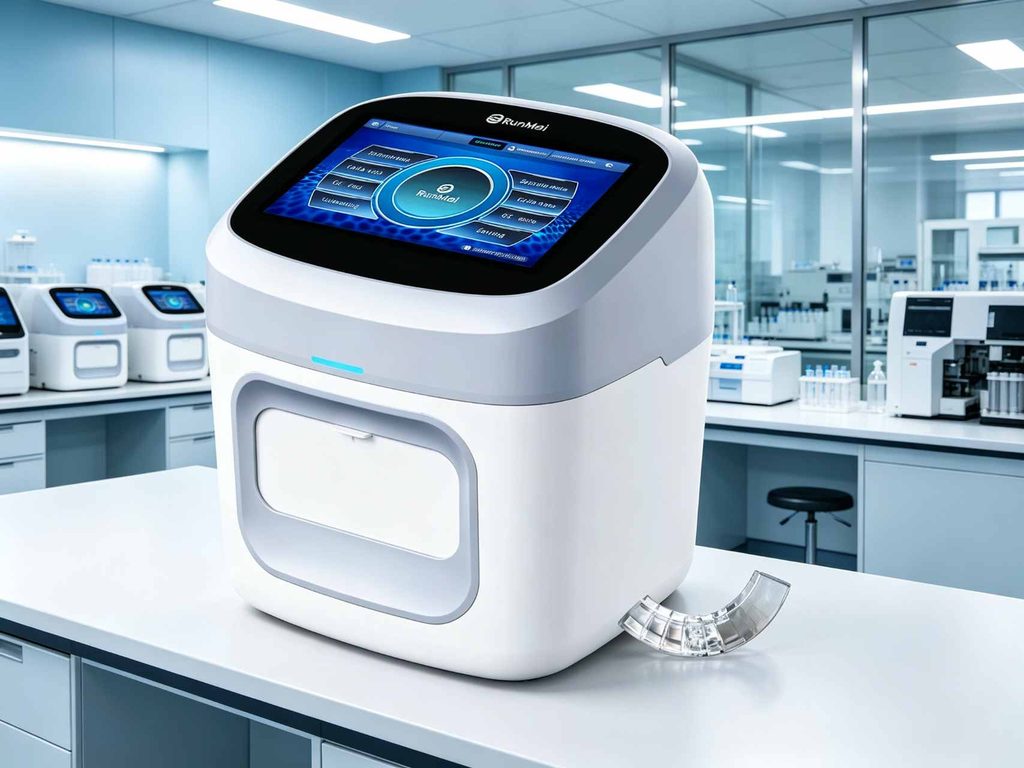
Figure 1: Preparing a sample for CBC testing on an automatic hematology analyzer in a rural health center.
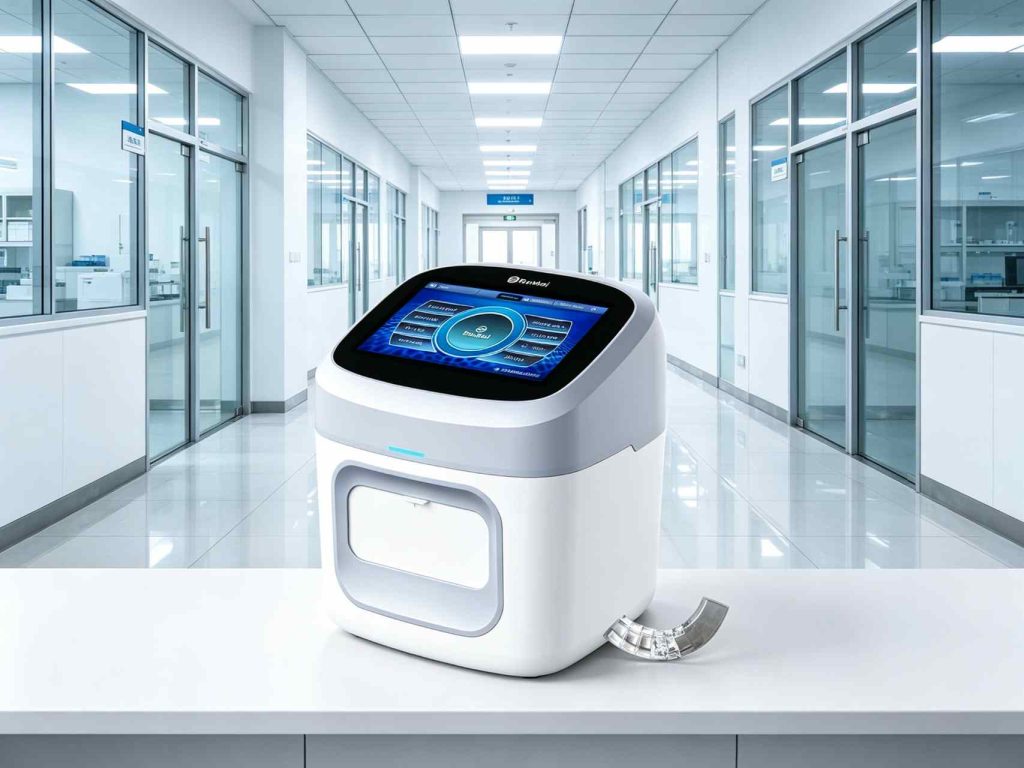
Figure 2: A portable blood analyzer turns any desk in a rural clinic into a point-of-care testing station.
الأسئلة المتداولة
Why are point-of-care tests often unavailable in rural Ghana?
The Bono study and similar research point to procurement, distribution, and equipment gaps. Facilities are frequently never equipped with analyzers, and reagents may expire in regional stores before reaching rural sites.
Which tests should a rural facility prioritize?
The WHO Essential Diagnostics List prioritizes tests for the most common conditions – and the complete blood count is among them, supporting anemia, infection, and bleeding-risk assessment.
Can one device cover a whole district?
A single automatic analyzer can serve a health center, but districts usually combine bench-top analyzers at facilities with portable analyzers for outreach to reach all communities.
References and Sources
Authoritative sources cited in this article:
- PMC10623501, “Availability, stock levels and usage of In-vitro diagnostics in the Bono region, Ghana: A cross-sectional study”
- WHO, Fourth WHO Model List of Essential In Vitro Diagnostics (EDL 4), 2023
- Impact Global Health, “The diagnostics deficit” (2024)
- Jani IV, Peter TF. How Point-of-Care Testing Could Drive Innovation in Global Health. N Engl J Med 2013;368:2319-2324.
Related RunMei Health resources referenced in this article:
- [L1] hematology analyzer for point-of-care settings — https://runmeihealth.com/product/automatic-hematology-analyzer/
- [L2] testing without a laboratory — https://runmeihealth.com/no-lab-no-problem-testing-without-a-laboratory/
- [L3] portable blood analyzer — https://runmeihealth.com/product/bca-320-automatic-portable-multi-function-analyzer/
- [L4] why rural health centers adopt point-of-care analyzers — https://runmeihealth.com/10-reasons-rural-health-centers-are-adopting-point-of-care-analyzers/
Disclaimer
This article is provided for informational and educational purposes only and does not constitute medical advice, diagnosis, or treatment. Always consult a qualified health professional for clinical decisions. RunMei Health devices are intended for use by trained operators in accordance with local regulations and the manufacturer’s instructions for use; product availability, regulatory clearance, and configurations may vary by country. Figures cited from third-party sources reflect the publications referenced at the time of writing.
Body word count: 1120 words (target range 1000–1500) | Total including FAQ: 1226 words