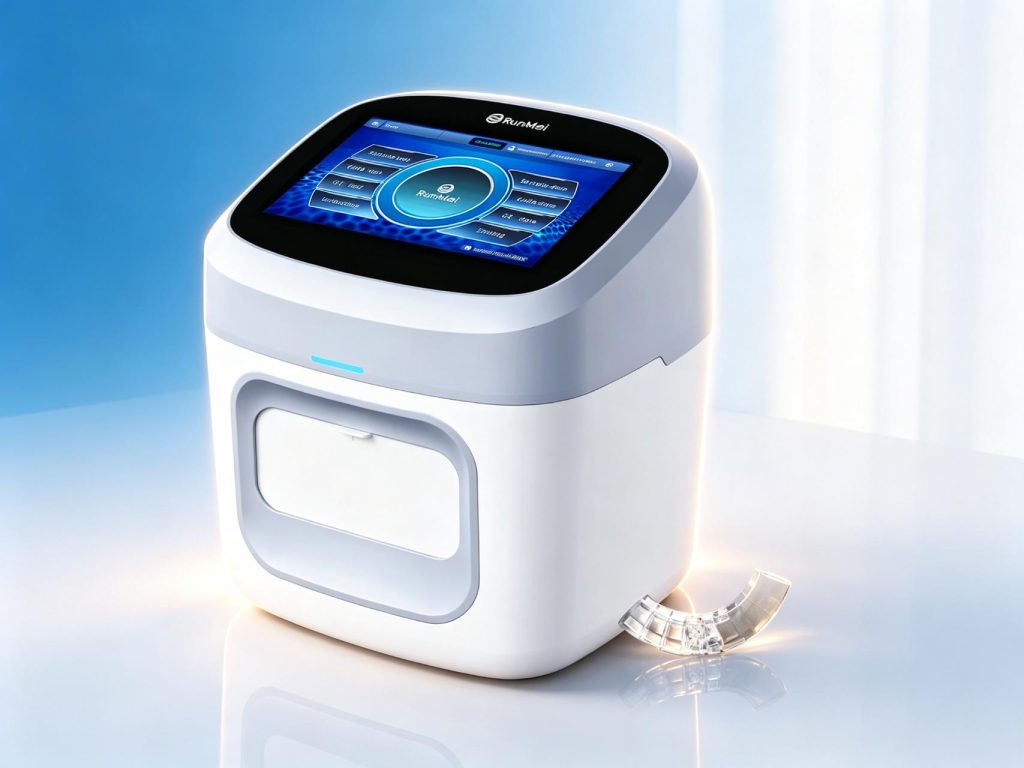
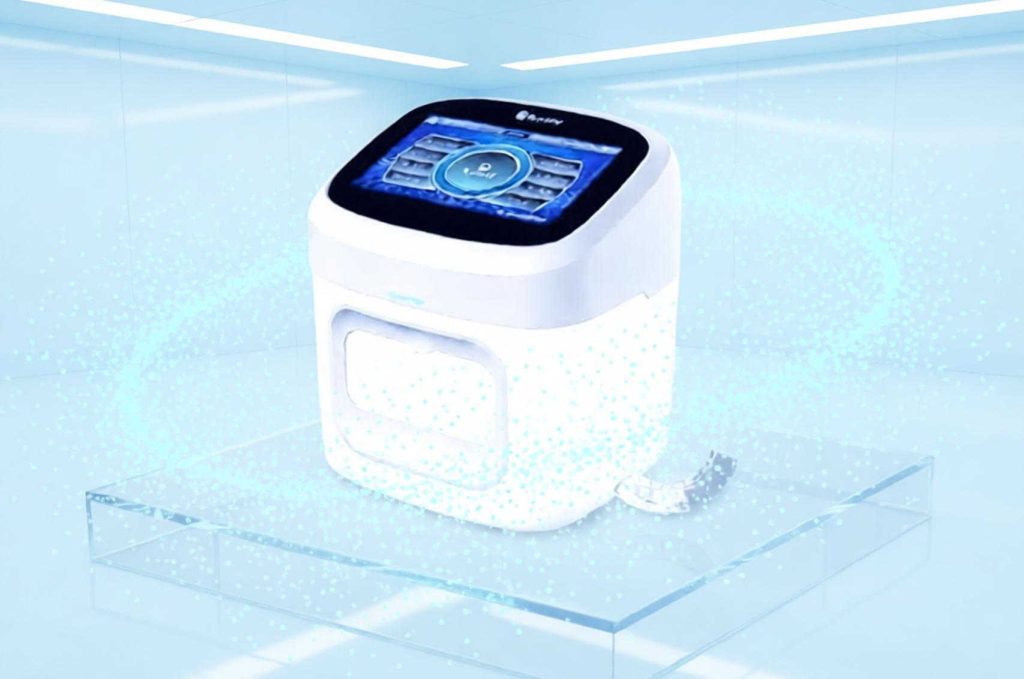
When the nearest laboratory is hours away, point-of-care hematology testing brings the complete blood count to the patient instead of the patient to the lab.
By Dr. Priya Nair, MD (Clinical Pathologist) | Reviewed by Dr. Carlos Mendes, MD (Public Health Systems Specialist) | Published 2026-10-10 | Read time: ~7 minutes
What happens to a child with fever and pallor when the nearest laboratory is a full day’s journey away? For remote village populations, that question has usually gone unanswered – until point-of-care hematology testing in rural settings brought the complete blood count to the patient instead of forcing the patient onto a day-long trip to the lab.
Point-of-care (POC) hematology uses compact analyzers to produce red-cell, white-cell and platelet counts at the health post itself, within minutes of sampling. This review synthesizes the clinical rationale, workflow requirements and operational constraints of running such testing where reference infrastructure is effectively absent.
The evidence-based answer is that POC CBC testing is feasible, accurate enough for screening and triage, and strongly aligned with global guidance – provided clinics design for training, power and quality control rather than merely purchase a machine.
The Rationale for Point-of-Care Hematology in Remote Villages
Remote villages are defined less by distance than by time: the half-day motorcycle ride, the unreliable bus, the samples that perish before they reach a city laboratory. In that context, a test that returns next week is clinically useless; a test that returns in minutes changes who survives. Point-of-care hematology collapses the geography of diagnosis and brings results to where care actually happens.
Why a Blood Count, and Why Now
The complete blood count is among the most requested investigations in primary care because it speaks to anemia, infection and bleeding – the dominant burdens of rural morbidity. Global bodies now explicitly support basic hematology at first-level facilities; the WHO Model List of Essential In Vitro Diagnostics names the tests that belong closest to patients, while the WHO overview of primary health care frames diagnostics as foundational to universal coverage.
What to Measure: Parameters and Clinical Decision Points
A POC analyzer typically reports hemoglobin, red-cell count, white-cell count and platelets, and on differential models a white-cell breakdown. These parameters guide three recurring decisions that dominate village medicine rather than a single diagnosis.
Anemia: Detection and First Clues
Hemoglobin and red-cell indices reveal who is anemic and hint at the cause. Small red cells suggest iron deficiency or inherited traits, and reviews such as a New England Journal of Medicine review of microcytic anemia show how profoundly these indices shape diagnosis. This is the basis of complete blood count testing in rural pregnancy, where untreated anemia raises maternal and fetal risk, and of CBC testing for malaria and anemia in children, where parasite-driven hemolysis must not be missed.
Infection and Bleeding: Triage Signals
White-cell elevation and differential shifts help distinguish bacterial from viral illness, while platelets flag bleeding risk in dengue or severe infection. Serial counts also support CBC monitoring during rural HIV care, where drug-related marrow suppression must be watched, and CBC in chronic kidney disease management, where anemia signals worsening kidney function.
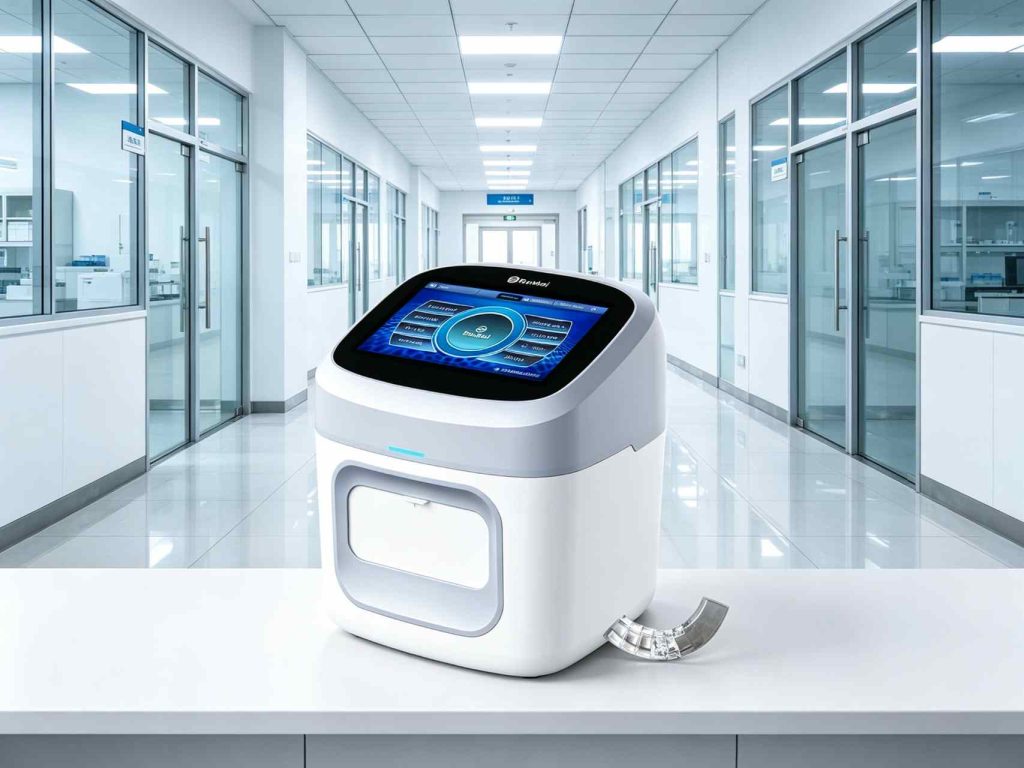
Figure 1: A compact point-of-care analyzer delivers a complete blood count at a village health post within minutes of sampling.
Image title: Point-of-care hematology analyzer at a remote village health post | Alt text (web): point-of-care hematology analyzer for remote village CBC testing
Structured data: ImageObject schema for this image is provided in the Technical SEO & GEO Package below.
Workflow: Sampling, Operation and Turnaround
A point-of-care workflow at a village post is deliberately simple: a finger-prick or venous sample, a short on-board incubation, and a printed or transferred result. A turnaround of a few minutes means the clinician acts during the same encounter rather than waiting for a courier that may never come.
Sample Handling in the Field
Fresh samples are the single biggest advantage of on-site testing, because they avoid the clumping and aging that degrade transported blood. Operators must follow the manufacturer’s sample type, reagent and timing instructions precisely; capillary samples are convenient but demand careful technique to avoid tissue contamination that skews the count.
When Results Leave the Machine
A result is only useful if it is recorded, acted on and remembered. Where paper records are the norm, the analyzer’s printed slip should be filed in the patient’s chart and key trends copied into a simple log. Where digital systems exist, exporting counts into the clinic register lets visiting specialists see how a child’s hemoglobin has moved over months rather than on a single difficult day.

Figure 2: A portable multi-function analyzer supports fingertip sampling and rapid CBC results during village outreach.
Image title: Portable analyzer enabling fingertip blood testing in the field | Alt text (web): portable hematology analyzer for fingertip blood testing in rural villages
Structured data: ImageObject schema for this image is provided in the Technical SEO & GEO Package below.
Training, Power and Quality Control in Isolated Settings
Accuracy is not automatic. It rests on three pillars: trained operators, reliable power, and daily quality control. Compact analyzers are designed for staff with modest credentials, yet structured training and periodic competency checks remain essential rather than optional extras.
Power and Reagents at the Margin
Unstable electricity and reagent shelf life are the two operational killers of rural instruments. Clinics should budget for battery backup or solar capacity, and order reagents in quantities matched to real volume to avoid expiry. In the United States, the FDA’s CLIA-waived analytes database lists tests simple enough for facilities without full laboratory licenses, clarifying the regulatory pathway for many point-of-care hematology systems.
Referral Pathways and Integration With the Health System
Point-of-care testing does not replace referral; it sharpens it. A village post that generates reliable counts can decide when a patient must be sent onward, and hand the receiving hospital a coherent data packet instead of a blank chart written from memory.
There is also an equity argument. When a village can measure its own patients, it stops being a perpetual recipient of outside judgments and becomes a partner in its own health. Clinicians who trust their local counts refer less hesitantly, and communities that see consistent answers begin to trust the post again – a return that no courier can deliver.
Over time, aggregated results reveal community patterns – seasonal anemia, outbreaks, a rising chronic-disease burden – that individual samples hide. When these local counts are linked to district data, they become a planning asset rather than a bedside decision alone, guiding where nurses, drugs and outreach should next be deployed.
الأسئلة المتداولة
What is point-of-care hematology testing?
It means running a complete blood count at or near the patient on a compact analyzer, instead of sending samples to a distant central laboratory. Results – red cells, white cells, hemoglobin and platelets – are available in minutes, supporting same-visit decisions about anemia, infection and referral.
Can village health workers without a laboratory degree operate these analyzers?
Many compact systems are designed for operators with focused training, on-board prompts and simple protocols. In the US, the CLIA framework classifies some hematology tests as waived for use outside full laboratories. Competency checks, daily quality control and refresher training remain essential regardless of credential.
How accurate are point-of-care results compared with a reference lab?
Modern compact analyzers are reproducible and adequate for screening and triage, and fresh local samples often outperform specimens degraded in transit. Accuracy still depends on trained technique, timely analysis and daily quality control; ambiguous or markedly abnormal results should be confirmed against a reference laboratory.
What keeps a village analyzer running long-term?
Dependable power (battery or solar backup), reagent orders matched to real volume, planned maintenance and ongoing training. A device that cannot be powered, fed with reagents or serviced locally will fall silent within months, so these operational factors should be settled before the purchase decision.
Conclusion
Point-of-care hematology testing converts remote villages from diagnostic deserts into places where anemia, infection and bleeding risk can be found in minutes rather than weeks.
The technique is established and global guidance supports it; what separates success from silence is disciplined attention to workflow, training, power and quality control. Built on those pillars, a compact analyzer becomes one of the highest-yield investments a remote health post can make.
Disclaimer
This article is provided for general informational and educational purposes only and does not constitute medical advice, diagnosis, or treatment. Laboratory testing must be performed by trained personnel in accordance with applicable regulations, manufacturer instructions and local law. Always consult a qualified healthcare professional for clinical decisions. Product names and capabilities described may vary by market and regulatory clearance. RunMei Health does not warrant that any device is suitable for a specific facility or jurisdiction without professional evaluation.