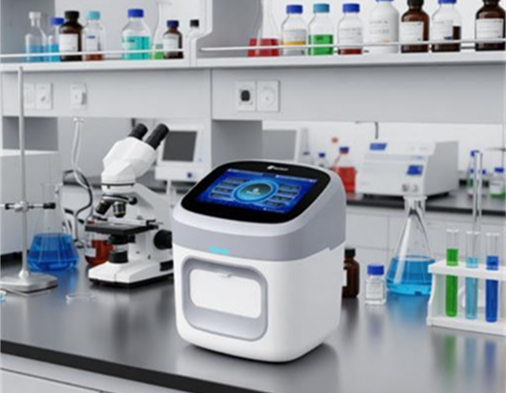
With the right analyzer and training, community health workers can run dependable complete blood counts in places no technologist has ever reached.
By Dr. Samuel Okafor, MD (Community Medicine Physician) | Reviewed by Dr. Carlos Mendes, MD (Public Health Systems Specialist) | Published 2026-10-12 | Read time: ~7 minutes
It is six in the morning at a village post, and the community health worker on duty is preparing for antenatal clinics. There is no technologist within fifty kilometers, no reference courier until next week, and a queue of mothers already forming. This is where trained community health workers operating blood cell counters turn a routine morning into a diagnostic one – the subject of this case-study analysis.
Task-shifting, or delegating laboratory tasks to less specialized staff after focused training, has become essential where professional technologists are scarce. A blood cell counter is one of the most adaptable tasks to shift, because modern devices handle the counting and the worker handles sampling and quality control.
The case for it is clear: with the right device and a structured training program, community health workers can run dependable CBCs in places no laboratory professional has ever reached, provided the skill is maintained rather than assumed.
The Scene: A Village Post Before Training
Picture the unassisted morning without this capability. Mothers queue, but anemia cannot be confirmed; feverish children are assessed by appearance alone; samples are drawn and set aside, hoping for transport that often fails – the familiar fate of the blood sample that never arrives.
The Bottleneck Is People, Not Technology
The barrier has rarely been the analyzer; it has been who runs it. Compact machines are now simple enough for a trained local worker, which shifts the problem from hardware to human-resource design. Once the people are prepared, the diagnostic gap closes quickly.
Community health workers already move easily between homes, trust clinics and speak the local language. Putting a small analyzer in their hands leverages an existing presence rather than building a new service from scratch – which is why task-shifting spreads faster than any top-down laboratory rollout.
Why Task-Shifting Works for Blood Cell Counting
Blood cell counting suits task-shifting well. The device performs the complex measurement automatically, leaving the worker with discrete, learnable steps: patient identification, capillary or venous sampling, loading, and reading flags.
Why This Task Transfers More Easily Than Others
Unlike microscopy-based diagnosis, an automated count does not depend on years of pattern recognition. Its reliability is supported by structured quality control, an approach aligned with the WHO overview of primary health care, which foregrounds frontline services. The anemia burden in WHO’s anaemia fact sheet is concentrated exactly in the communities these workers serve.
Task-shifting also answers a staffing reality that is unlikely to change soon. Professional technologists cluster in cities, while the patients who need testing most live in villages. Delegating a well-defined, quality-controlled task to trusted local workers closes that gap without waiting for a workforce that may never arrive.

Figure 1: A trained community health worker operates a compact blood cell counter at a rural health post.
Image title: Community health worker running a blood cell counter at a village post | Alt text (web): blood cell counter operated by a community health worker in a village clinic
Structured data: ImageObject schema for this image is provided in the Technical SEO & GEO Package below.
What a Good Training Program Actually Contains
A credible training program is short on ceremony and long on competency. It combines classroom basics, supervised practice on real samples, and a sign-off only when the worker performs the full cycle independently.
Elements That Make It Stick
Sessions cover infection control, correct sampling, on-board operation, daily quality control, troubleshooting common errors, and when to refer rather than interpret. New workers benefit from understanding differential blood analyzers explained in plain terms, since flagged differential results often drive the decisions they must escalate. Refresher sessions and a named mentor contact close the loop.
Role-play helps more than lectures. A worker who has practiced a difficult finger-prick, a failed sample and a flagged result under supervision handles the same surprises on a busy morning without freezing. Competency sign-off should require these real scenarios, not a written test alone.
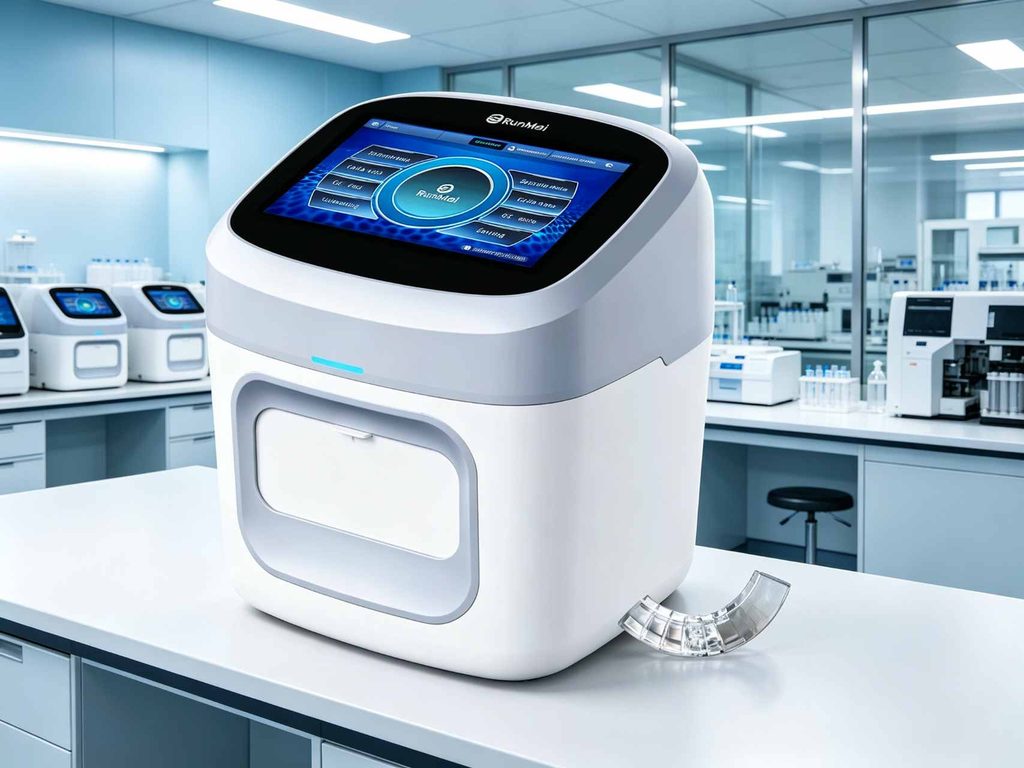
Figure 2: A portable multi-function analyzer makes worker-led CBC testing feasible across remote outreach posts.
Image title: Portable analyzer supporting worker-led village CBC services | Alt text (web): portable hematology analyzer for community health worker CBC testing
Structured data: ImageObject schema for this image is provided in the Technical SEO & GEO Package below.
Case Study: One District’s Worker-Led CBC Service
Consider a district that trained twenty community health workers on compact analyzers across its remote posts. Within a year, antenatal anemia detection rose sharply because every booking visit produced a hemoglobin number rather than a guess.
What Changed in Practice
The workers began catching anemia earlier, supporting blood analyzers in maternal and child health by flagging pregnant women who needed iron or referral. Fever triage improved too, enabling early detection of infectious disease with CBC rather than intuition alone. The device became a daily tool because the training built confidence, not just certificates.
Patient attitudes shifted as well. Once mothers received an actual hemoglobin number and an explanation, they returned for follow-up and brought neighbors. The analyzer did more than count cells; it restored the community’s sense that the village post could answer their questions.
Sustaining the Skill Beyond Training Day
Training day is not the finish line; it is the starting line. Skills erode without use, and a worker who never runs a quality-control test quickly loses the habit that keeps results trustworthy.
Keeping the Capability Alive
Sustainable programs schedule regular competency checks, maintain a simple log of results and errors, and pair each post with a distant mentor. Before purchase, confirm the device’s clearance in the FDA’s 510(k) premarket notification database and choose models whose complexity a trained worker can sustain. For patients with chronic illness, consistent counts – as discussed in the New England Journal of Medicine review of anemia of chronic disease – matter more than any single perfect reading.
Recognition matters too. Workers who run counts should be visibly valued, given clear decision rules and a direct line to a clinician when a result is worrying. Programs that treat these staff as true members of the diagnostic team retain them; programs that treat them as cheap labor quietly lose the capability they worked so hard to build.
الأسئلة المتداولة
Can community health workers really operate a blood cell counter reliably?
Yes, with structured training and a suitable device. Because the analyzer performs the count automatically, workers focus on sampling, loading, quality control and flag recognition. Competency-based sign-off, refresher training and daily QC are what make their results dependable.
How long does training take?
Programs typically run from a few days to a couple of weeks of supervised practice, followed by on-the-job mentoring. The exact duration depends on the device and the worker’s prior experience; competency should be demonstrated before independent operation, not assumed from attendance.
What happens when a worker leaves or is absent?
Every post should train at least two operators and keep a simple record of procedures, quality-control schedules and contacts. Cross-training and a named mentor ensure the service continues when staff rotate, which is the most common reason rural testing stalls.
Is task-shifted testing as accurate as a technologist-run lab?
For the automated CBC, results depend more on fresh samples, correct technique and daily QC than on the operator’s title. When those are enforced, trained workers produce reliable screening and triage results; ambiguous or markedly abnormal findings should be confirmed against a reference laboratory.
Conclusion
Shifting blood cell counting to community health workers closes a gap that money alone could not – the distance between a village and a professional technologist.
The model works when training is competency-based, devices are simple enough to sustain, and skills are maintained over time. Done that way, a village post gains a diagnostic capability, and the mothers and children it serves stop waiting for a sample that may never arrive. The community health worker, once a mere messenger, becomes a diagnostician in their own right.
Disclaimer
This article is provided for general informational and educational purposes only and does not constitute medical advice, diagnosis, or treatment. Laboratory testing must be performed by trained personnel in accordance with applicable regulations, manufacturer instructions and local law. Always consult a qualified healthcare professional for clinical decisions. Product names and capabilities described may vary by market and regulatory clearance. RunMei Health does not warrant that any device is suitable for a specific facility or jurisdiction without professional evaluation.