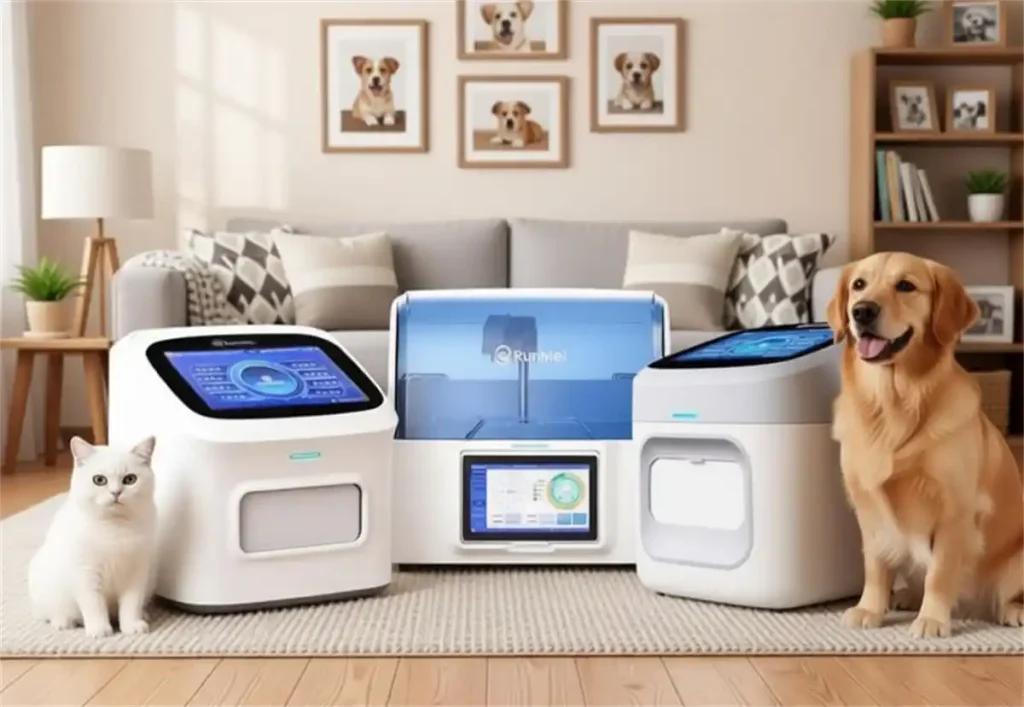
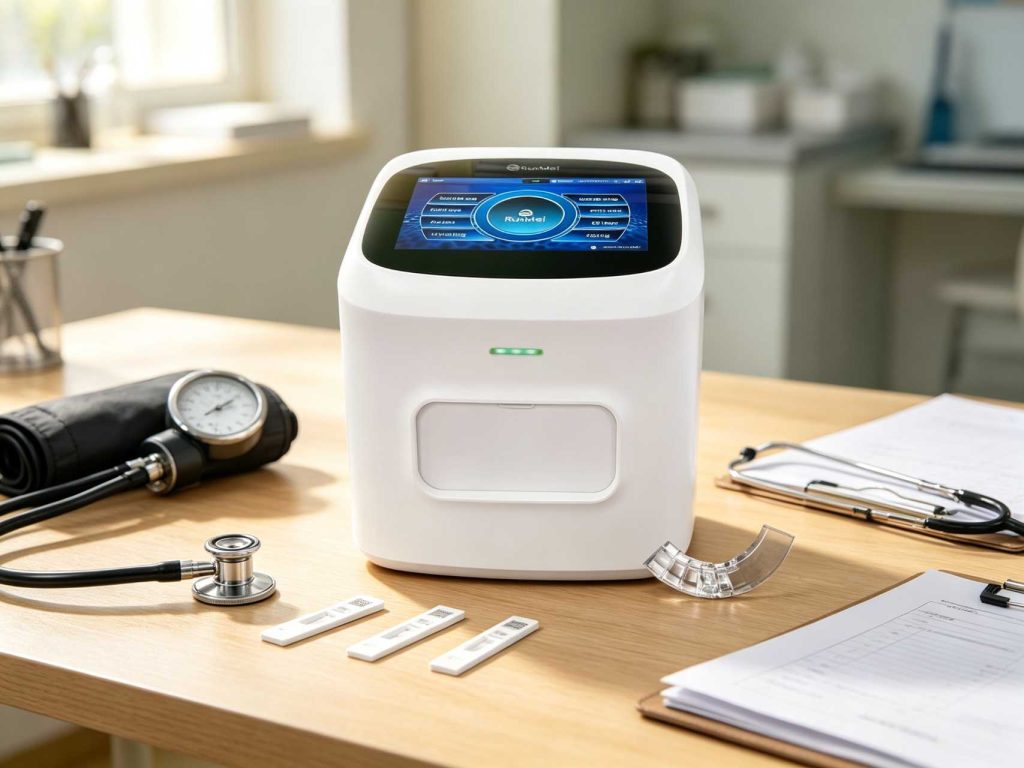
When patients cannot travel to the clinic, the clinic can travel to them – a mobile analyzer turns outreach days into full diagnostic sessions.
By Dr. Ling Chen, MD (Laboratory Medicine Specialist) | Reviewed by Prof. James Whitfield, PhD (Laboratory Quality & Accreditation Expert) | Published 2026-10-13 | Read time: ~7 minutes
Think of a mobile hematology analyzer as a clinic on wheels – not a lab that happens to move, but a designed service that travels to where patients cannot. Just as a library bus does not wait for readers to arrive, mobile outreach does not wait for villagers to reach the hospital. This step-by-step guide explains how a mobile hematology analyzer outreach program brings CBC testing to village camps.
For patients who cannot travel, distance is the whole barrier. A portable analyzer, a trained operator and a reliable power source convert an outreach day into a full diagnostic session – same-day hemoglobin, white cells and platelets, not a coupon for a future trip.
The practical answer is that mobile CBC outreach works when the device is light and battery-ready, the day is planned around sample flow, and every abnormal result has a clear referral path back to the clinic.
The Clinic on Wheels: A Familiar Analogy
The analogy holds because a mobile clinic is a complete mini-system, not a bench dragged into a truck. It carries its own power, its own consumables and its own workflow. A hematology analyzer that cannot survive a bumpy road, a hot tent and a long day without mains power has no place in outreach.
Why the Analogy Helps Planning
Thinking in terms of a traveling clinic forces you to account for everything a fixed lab takes for granted: water, power, waste, records and a place to sit. That mental checklist is what makes outreach succeed rather than become a logistician’s nightmare.
It also changes how communities see the service. When the clinic arrives with results in hand rather than a referral slip, people trust it more and return next season. The mobile unit becomes a recognizable, expected fixture of village life rather than a one-off visit.
Step 1: Choosing a Truly Portable Analyzer
Choose a device designed for movement: light enough to carry, rugged enough for transport, battery-ready, and tolerant of temperature and vibration. Fingertip sampling removes the need for venous blood draws in the field.
What to Look For
Prioritize battery life for a full day, closed reagent packs that survive travel, and a simple interface. Confirm the device’s clearance in the FDA’s 510(k) premarket notification database, and match its menu to your outreach goals – whether anemia screening, maternal checks or infectious triage.
Test how the machine reacts to being moved. Vibration, dust and heat are routine in outreach tents, and a device that must be handled like a museum piece will not survive a season. Ruggedization matters as much as specifications here.
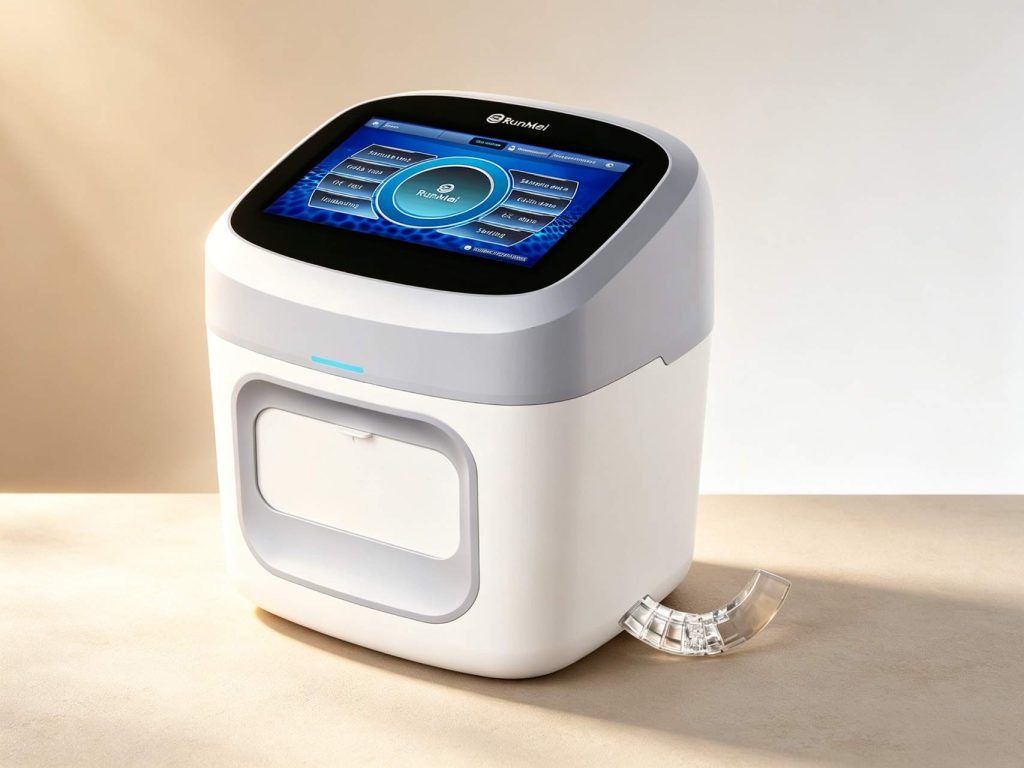
Figure 1: A mobile hematology analyzer brings same-day CBC testing to a village outreach camp.
Image title: Mobile hematology analyzer set up at a village outreach camp | Alt text (web): mobile hematology analyzer for village outreach CBC testing
Structured data: ImageObject schema for this image is provided in the Technical SEO & GEO Package below.
Step 2: Planning the Outreach Day
Plan the day around sample flow. Set up early, charge batteries, run quality control before the queue, and group similar tasks so the operator is not switching between steps. A calm, predictable rhythm prevents the small errors that a long, rushed afternoon invites.
Running an Outreach Camp
A typical camp registers patients, samples in batches, runs the analyzer continuously, and hands results straight back to a clinician on site. This is where the model earns its cost: a patient leaves with a number and advice the same morning, not an appointment for next month.
Keep the queue moving by separating registration, sampling and reading into stations. A smooth flow reduces waiting time, which keeps both patients and the operator from making rushed, error-prone decisions at the end of a long day.

Figure 2: A portable battery-ready analyzer runs quality control and samples at a field screening site.
Image title: Portable battery-ready analyzer in a field screening tent | Alt text (web): portable hematology analyzer for community screening camps
Structured data: ImageObject schema for this image is provided in the Technical SEO & GEO Package below.
Step 3: Sampling, Running and Recording in the Field
Sampling, running and recording in the field demand discipline. Correct finger-prick technique, prompt analysis, and a durable record – paper or digital – prevent the errors that creep in when staff are rushed.
Keeping Results Trustworthy Out There
Quality control runs at the start of the day, and any flagged result triggers a repeat or a smear for later review. The same platform supports early detection of infectious disease with CBC, thalassemia monitoring with a blood analyzer, blood analyzers in maternal and child healthe CBC in chronic kidney disease management – all on one outreach day.
Waste handling in the field deserves its own rule. Lancets and used materials must be collected in a safe container, not left at the site. A camp that leaves sharps behind undercuts the trust it builds with its screening.
Step 4: Referral, Follow-Up and Quality
Every abnormal result needs a destination. Outreach without referral is just measurement; the value is in the action that follows, and in the patient who returns to the clinic rather than being lost.
Referral and Follow-Up
Print or send a result, flag urgent cases for same-day clinic review, and schedule follow-up. As discussed in the New England Journal of Medicine review of anemia of chronic disease, serial counts guide long-term care, so outreach should reconnect patients to ongoing monitoring. This model aligns with the WHO overview of primary health care و the WHO Model List of Essential In Vitro Diagnostics, which support bringing testing close to the community.
الأسئلة المتداولة
What is a mobile hematology analyzer?
It is a lightweight, battery-ready analyzer designed to be carried or driven to village outreach camps rather than fixed in a laboratory. It runs CBCs on fingertip or venous samples on site, giving same-day results to patients who cannot travel to a hospital.
How do you power an analyzer during an outreach day?
Use a device with a long internal battery or a portable power station, fully charged before departure, plus a spare for long days. Solar panels can top up supply between samples. The goal is enough charge for the planned sample volume plus a buffer.
Can field results be as reliable as clinic results?
They can be, when quality control is run at the start of the day, sampling technique is correct, and samples are analyzed promptly. Fresh on-site samples often outperform transported specimens, and flagged results should be repeated or confirmed later.
What happens to abnormal results found in outreach?
Each should have a clear path: urgent cases referred for same-day review, routine abnormal results scheduled for follow-up, and records shared with the patient’s usual clinic. Outreach is only valuable when it connects back to ongoing care.
Conclusion
A mobile hematology analyzer turns outreach days into diagnostic sessions, collapsing the distance between a village and the laboratory.
With a rugged battery-ready device, a planned sample flow, reliable field quality control and clear referral paths, communities get same-day blood testing without the journey. The clinic on wheels becomes, in practice, the village’s first reliable encounter with its own blood count – and the beginning of a relationship that keeps patients coming back instead of traveling away for answers.
Disclaimer
This article is provided for general informational and educational purposes only and does not constitute medical advice, diagnosis, or treatment. Laboratory testing must be performed by trained personnel in accordance with applicable regulations, manufacturer instructions and local law. Always consult a qualified healthcare professional for clinical decisions. Product names and capabilities described may vary by market and regulatory clearance. RunMei Health does not warrant that any device is suitable for a specific facility or jurisdiction without professional evaluation.