Small veins, small samples, big stakes. Village-level pediatric blood counts need analyzers and skills built for children.
By Dr. Priya Nair, MD (Clinical Pathologist) | Reviewed by Dr. Robert T. Malone, PhD, MLS(ASCP) (Senior Clinical Laboratory Scientist) | Published 2026-10-08 | Read time: ~7 minutes
A pediatric CBC is a complete blood count taken from a child — often a finger-prick, a tiny tube, a minute on the analyzer. Its simplicity hides its stakes: for an under-five, that count can separate a routine fever from malaria, severe anemia, or the early signs of something far worse. This is the promise of pediatric CBC village clinic programs: a child’s blood, tested where the child lives, not after a long journey to a distant laboratory.
Amara was three when she was carried into the village clinic, listless and feverish. The clinician pricked her finger, ran a small sample on a compact analyzer, and saw a hemoglobin far below the level a child that age should have. That number started iron treatment, flagged a referral, and changed the course of her illness. This is her story, and a practical guide to how village clinics can give every Amara the same chance.
What a Pediatric CBC Reveals in a Sick Child
A child cannot describe anemia; she can only appear pale, tired or breathless. The CBC turns that vague picture into numbers: hemoglobin shows the oxygen reserve, the white-cell count hints at bacterial infection, and the platelets flag bleeding or dengue risk. In rural settings where malaria and anemia overlap, the count is often the first real clue. CBC testing for malaria and anemia in children describes exactly how these readings guide pediatric care.
The same logic protects children living with chronic conditions. CBC monitoring in rural HIV care shows how serial counts watch for treatment-related blood toxicity, and the microcytic pattern on a child’s report can point toward iron deficiency early, as a New England Journal of Medicine review of microcytic anemia explains. For the village clinician, the practical takeaway is that a pediatric CBC rarely answers only one question at a time: anemia, infection and risk often appear together in the same small sample.
Small Veins, Small Samples: The Practical Challenge
Children are not small adults when it comes to sampling. Veins are tiny, blood volume is small, and taking too much can itself be a problem. A microsample analyzer that accepts a finger-prick or capillary fill removes the need for a difficult venipuncture. Child blood sampling then becomes a quick, low-pain procedure that a trained clinician can perform while the parent holds the child.
Built for How Children Actually Present
Child-friendly workflow matters as much as the machine: a calm room, a reassuring explanation, a single quick prick, and a result before the child has fully settled. The analyzer should require only a few drops, so the test is repeatable for follow-up without adding distress. This is what makes under-five screening sustainable rather than an ordeal.
The goal is not to test children faster. It is to test them kindly, and often, before they become emergencies.

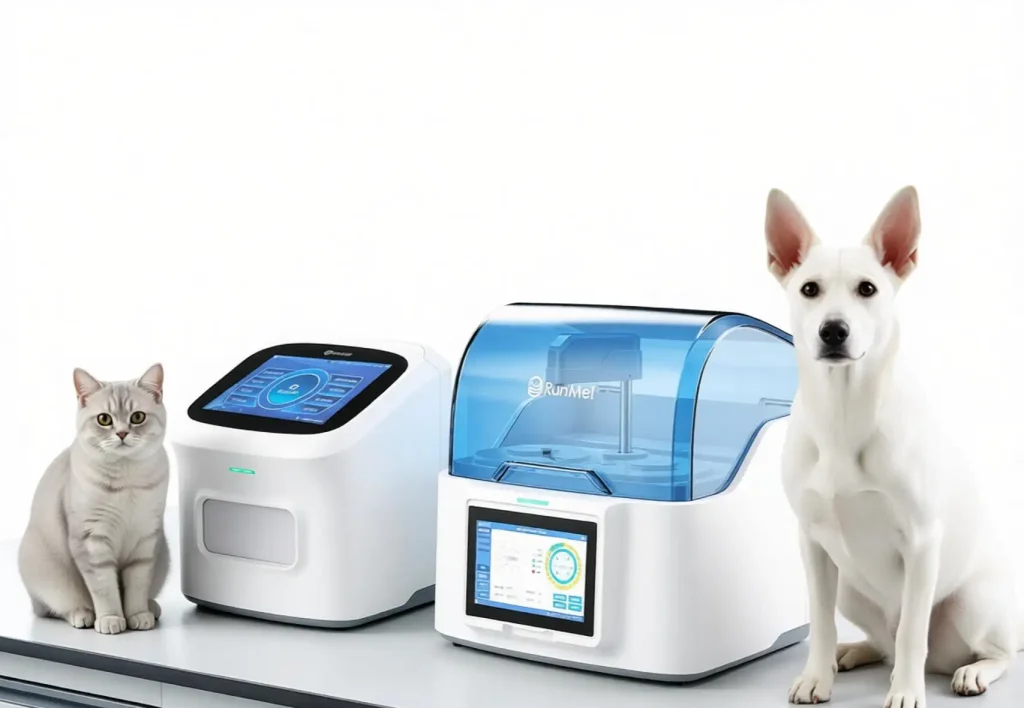
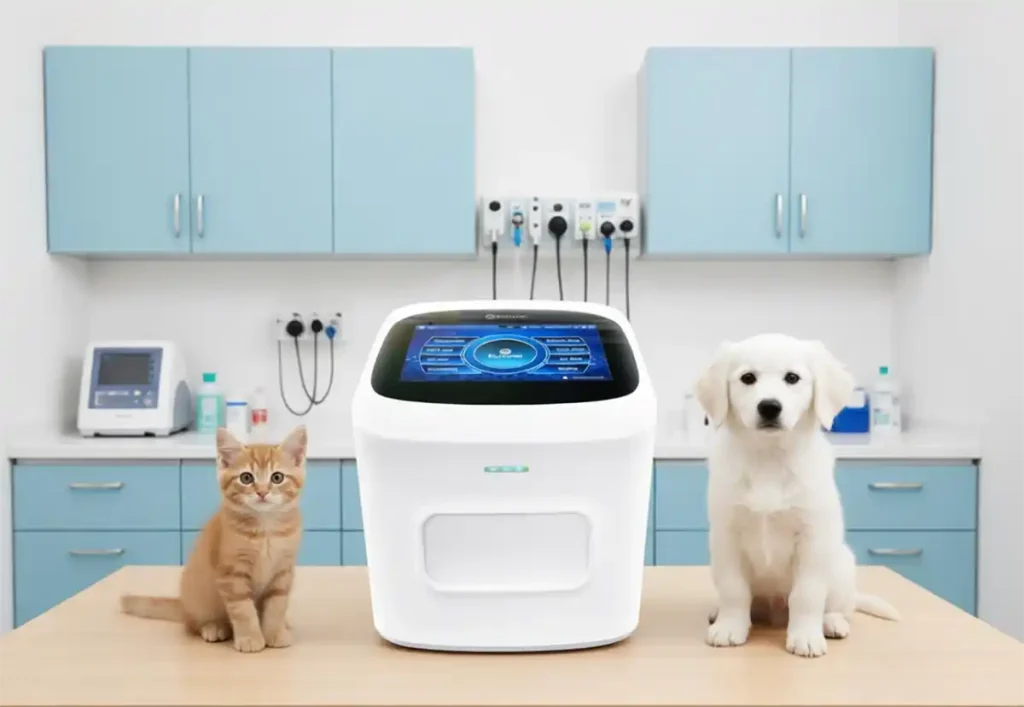
Figure 1: A compact analyzer returns a child’s CBC in minutes from a few drops of capillary blood.
Image title: Hematology analyzer running a pediatric CBC from a finger-prick sample | Alt text (web): hematology analyzer for pediatric CBC testing at a village clinic
Structured data: ImageObject schema for this image is provided in the Technical SEO & GEO Package below.
When the Count Says ‘Refer’
A village clinic cannot treat every abnormal count, and it should not try. Clear referral triggers turn a result into a decision: very low hemoglobin, dangerously low platelets, or a white-cell count suggesting severe infection. The child with a reassuring count, by contrast, can be managed locally with follow-up. complete blood count testing in rural pregnancy shows the same early-detection logic extended to mothers, and CBC in chronic kidney disease management shows how serial counts support long-term pediatric follow-up.
Amara’s own referral began with a single hemoglobin number. Because the clinic had measured it locally, the district hospital received the result, the clinical story and the urgency — a handoff that saved her family a wasted trip and saved Amara precious time.
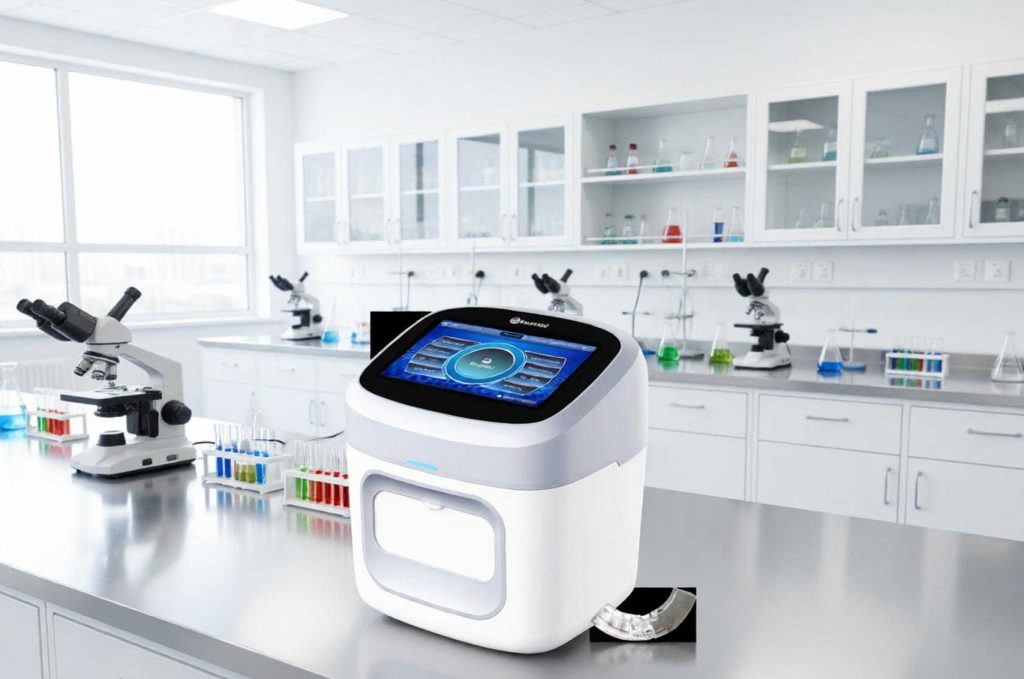
Figure 2: A portable analyzer brings pediatric blood counts to outreach sessions and village posts.
Image title: Portable multi-function analyzer for child-friendly outreach sampling | Alt text (web): portable hematology analyzer for pediatric microsample blood testing in rural clinics
Structured data: ImageObject schema for this image is provided in the Technical SEO & GEO Package below.
Training Staff for Children’s Testing
Pediatric sampling rewards skill and calm. Staff need training in correct capillary technique, in running the pediatric sample on the analyzer, and in recognizing which numbers to act on. Quality control still applies: a child’s result is no place for a drifted instrument. In the United States, the FDA’s CLIA-waived analytes database clarifies which simple tests clinics may run without a full laboratory license.
Supervision by a pathologist or senior lab scientist, even at a distance, keeps interpretation safe. The village clinician does not need to be a hematologist; she needs to recognize the red flags and know the referral path. Regular case review, where a sample of child results is discussed with a senior colleague, also builds judgment over time and catches drift before it affects patients.
Bringing the Child’s Count to the Village
The vision is simple: every under-five in a rural community can receive a CBC close to home, with a child-friendly method and a clear route to referral. This is squarely within WHO’s overview of primary health caree the WHO Model List of Essential In Vitro Diagnostics places basic hematology at first-level care for exactly this reason.
Amara recovered, and she returns each season for a quick finger-prick check. Her story is ordinary now, because the village clinic has the analyzer, the skill and the referral link. For the next child carried through the door, that is the whole point of pediatric blood counts at the village level.
الأسئلة المتداولة
Can a village clinic run a CBC on a young child?
Yes. Compact analyzers that accept a finger-prick capillary sample make pediatric CBC testing practical at the village level, using only a few drops of blood and a trained, calm operator.
How is a child’s blood sample taken?
For pediatric testing, a finger-prick or capillary sample is usually preferred over venipuncture. It is quick, low-pain and well tolerated when the child is held and comforted by a parent.
What pediatric results should trigger a referral?
Very low hemoglobin, dangerously low platelets, or a white-cell count suggesting severe infection warrant urgent referral. Clear, written thresholds help clinicians decide consistently.
Does a pediatric CBC require a specialist?
No. A trained clinician can run the test and recognize red-flag results, with supervision and referral support from a pathologist or senior laboratory service. The specialist reviews the complex or abnormal cases rather than performing every routine test.
Conclusion
Small veins and small samples need equipment and technique designed for children, not adapted from adult practice. When a village clinic has a microsample analyzer, a child-friendly workflow and clear referral triggers, a feverish toddler becomes a measurable, treatable patient.
Amara’s story shows what is possible. The task is to make that possibility universal — so that every under-five, in every village, arrives at care with a blood count that tells the truth.
Disclaimer
This article is provided for general informational and educational purposes only and does not constitute medical advice, diagnosis, or treatment. Laboratory testing must be performed by trained personnel in accordance with applicable regulations, manufacturer instructions and local law. Always consult a qualified healthcare professional for clinical decisions. Product names and capabilities described may vary by market and regulatory clearance. RunMei Health does not warrant that any device is suitable for a specific facility or jurisdiction without professional evaluation.